
소식
지금 바로 연락하세요How PVC Door Frames Keep Screws Tight
-
 작가
작가
- 10 9월 2026


A screw that loosens inside a door frame creates more than a small hardware problem. It can shift the hinge line, disturb the reveal, make the latch rub, and turn a finished door unit into a rework item. For door plants and distributors, the real question is whether the frame material can hold fasteners consistently through assembly, transport, and repeated use.
Screw Retention Depends on the Whole Profile
에이 PVC door frame profile holds screws through a combination of surface hardness, internal density, wall geometry, and fastener choice. The screw does not rely on one thin skin. It needs enough material around the thread to resist pullout and enough dimensional stability to keep the hinge seat from shifting after the door leaves the plant.
This is where PVC differs from soft or inconsistent wood stock. A knot, split, or wet section in wood can weaken one fastening point even when the rest of the frame looks acceptable. A factory-extruded PVC component gives the hardware station a more uniform base, so operators can use the same screw setting and expect the same bite across the run.
Hardness controls the first bite
Surface hardness matters at the moment the screw enters the frame. Xinhong New Materials’ PVC frame production data lists HD surface hardness in the 80-85 range, which gives hinge and strike screws a firm starting point. That hardness is useful only when it is paired with correct pilot practice, screw type, and torque control.
Nail-holding strength supports handling loads
Fastener retention also has to survive movement before installation. The same factory data lists nail-holding strength at 2200-2300N, giving door plants a useful indicator for how the profile resists pull and vibration. That value should be treated as component evidence, not as permission to ignore hardware engineering or installation instructions.

The Risk Shows Up at Hinges and Strike Plates
Door hardware concentrates load in small zones. Hinges carry the door leaf, strike plates absorb closing force, and lockset areas face repeated side pressure. If the frame material crushes, splits, or creeps around those fastening points, the door unit may pass a quick shop inspection but fail after shipping or field use.
A reinforced door frame approach is useful because it treats hardware zones as structural areas, not simple attachment points. The profile should provide enough wall thickness and screw engagement for the intended door weight. In selected designs, internal SMC backing can add stiffness inside the PVC frame without changing the visible outside profile.
| Hardware zone | Common failure sign | What the PVC frame must provide |
| Hinge side | Screws loosen or hinge leaf tilts | Hard, stable screw base with adequate thread engagement |
| Strike side | Latch rubs or plate shifts | Consistent material around the fastening pocket |
| Head jamb | Reveal changes during handling | Straight profile geometry through packing and storage |
| Brickmould edge | Trim opens near fasteners | Fastener-compatible exterior surface and clean miter fit |
Fastener Choice Still Decides the Final Result
에이 reinforced door jamb cannot compensate for the wrong screw. Exterior applications normally call for corrosion-resistant fasteners, and cold jobsite conditions may require pre-drilling to prevent stress around the fastening point. The material gives the screw a stable base, while the fastening method determines how well that base is used.
The practical shop rule is to control the variables that operators repeat every day. Screw length, thread style, driving angle, pilot size, and torque setting should be tested on the actual profile before a large order goes into production. A small test rack can reveal whether the screw head seats cleanly or whether the thread cuts too aggressively into the profile.
A stable setting prevents hidden damage
Overdriving can damage the holding zone even when the screw appears tight. Underdriving leaves the hinge proud and creates alignment problems. A repeatable torque range helps the PVC door jamb material do its job by keeping the thread engaged without crushing the surrounding profile.
The assembly line should test the real stack-up
Testing should include the hinge leaf, screw, jamb, any reinforcement layer, and the trim condition used in the actual door unit. A bare offcut may be useful for quick checks, but the full stack-up shows whether the hardware and profile work together under realistic assembly pressure.

What Buyers Should Ask Before Approving Samples
A screw-retention conversation should stay focused. The buyer does not need a broad material lecture; the buyer needs to know whether the frame will hold hardware in the intended door program. The most useful sample questions are direct:
- What hardness and nail-holding data apply to this exact frame profile?
- Which screw type and pilot practice were used during sample testing?
- Does the door weight require a standard PVC frame or an internally reinforced option?
- Can the same profile be supplied consistently for repeat production batches?
For importers comparing a solid PVC door frame with wood or mixed-material options, the sample should be judged by hinge stability, strike alignment, and edge condition after repeated opening and closing. Those checks answer the real manufacturing problem more clearly than a feature list.
Summary
PVC door frames keep screws tight when the material, profile geometry, and fastening method work together. Hardness gives the screw a firm start, nail-holding strength supports handling loads, and stable extrusion reduces the random weak spots that can appear in natural wood.
For door plants planning repeat production, Xinhong New Materials can support frame profile discussions around hardness, screw retention, internal reinforcement options, wall depth, and flat brickmould compatibility before the component moves into mass assembly.
자주 묻는 질문
Can PVC door frames hold hinge screws well?
PVC door frames can hold hinge screws well when the profile has suitable hardness, screw engagement, and fastening practice. Buyers should test the exact screw and profile together before approving production.
Is a reinforced PVC frame always necessary?
A reinforced option is not always necessary. It becomes more relevant when the door leaf is heavy, the hardware load is concentrated, or the buyer wants added stiffness in the frame structure.
What fasteners work best with exterior PVC profiles?
Exterior PVC profiles usually need corrosion-resistant fasteners such as galvanized, stainless, or coated screws. The final choice should match the hardware, exposure, and installer instructions.
Why does torque control matter during assembly?
Torque control prevents both loose hardware and hidden material damage. A stable torque setting helps each screw seat cleanly without crushing the profile or leaving the hinge proud.
Should buyers test offcuts or full door assemblies?
Offcuts are useful for quick checks, but full door assemblies show the real stack-up. The hinge, screw, jamb, reinforcement, and trim all affect how the fastening point performs.

제품
관련 상품
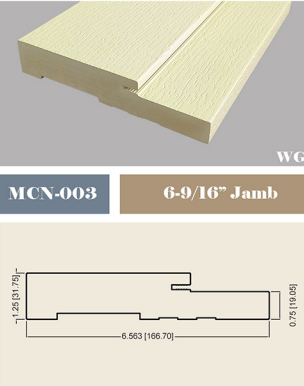
MCN-003 문틀은 6-9/16인치 두께의 문틀 프로파일로, 문과 창문 개구부의 측면 깊이를 완전히 덮어 문짝 가장자리부터 외벽까지 완벽한 마감을 제공합니다. 문짝을 안정적으로 고정하는 지지대 역할을 하며, 개구부의 가장자리를 깔끔하게 마감해줍니다. 특히 두꺼운 벽이나 외벽 단열 도어 프레임 시스템에 적합합니다.
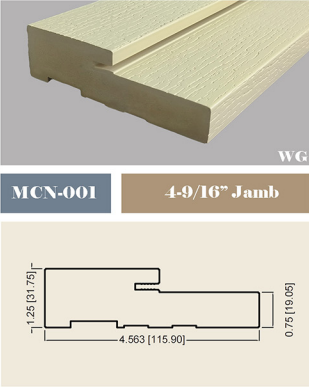
MCN-001 문틀은 4-9/16인치 두께의 문틀 프로파일로, 문과 창문 개구부의 측면 깊이를 완벽하게 덮어 문짝 가장자리부터 외벽까지 완전히 가려줍니다. 문짝을 안정적으로 고정하는 받침대 역할을 하며, 개구부의 마감을 깔끔하게 마무리해줍니다. 주거용 및 상업용 건물의 표준 벽면 문틀 시스템에 적합합니다.
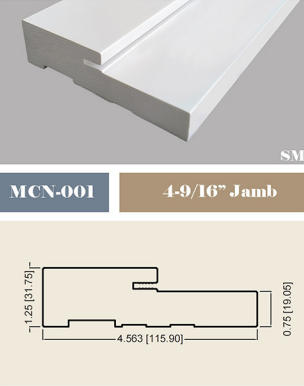
MCN-001 문틀은 4-9/16인치 두께의 문틀 프로파일로, 문과 창문 개구부의 측면 깊이를 완벽하게 덮어 문짝 가장자리부터 외벽까지 완전히 가려줍니다. 문짝을 안정적으로 고정하는 받침대 역할을 하며, 개구부의 마감을 깔끔하게 마무리해줍니다. 주거용 및 상업용 건물의 표준 벽면 문틀 시스템에 적합합니다.
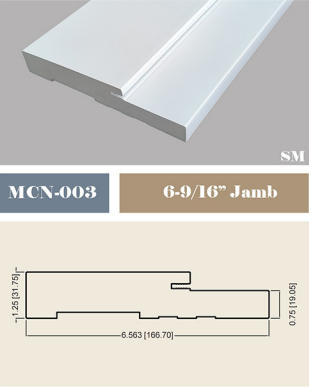
MCN-003 문틀은 6-9/16인치 두께의 문틀 프로파일로, 문과 창문 개구부의 측면 깊이를 완전히 덮어 문짝 가장자리부터 외벽까지 완벽한 마감을 제공합니다. 문짝을 안정적으로 고정하는 지지대 역할을 하며, 개구부의 가장자리를 깔끔하게 마감해줍니다. 특히 두꺼운 벽이나 외벽 단열 도어 프레임 시스템에 적합합니다.
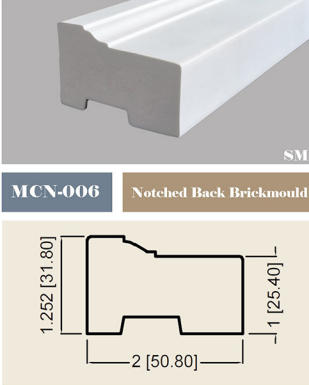
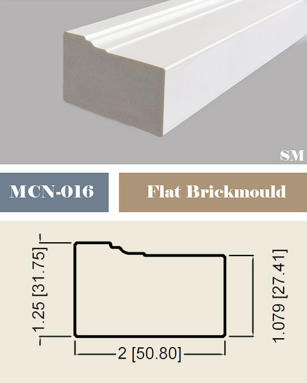
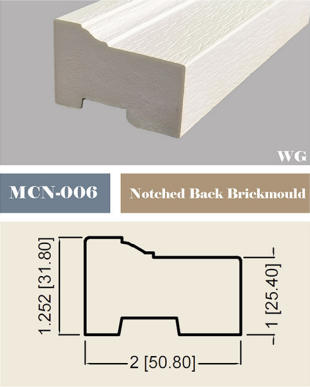
MCN-006 노치형 뒷면 브릭몰드는 문틀 및 창틀용으로 사용되는 고급 외장 마감재입니다. 뒷면의 노치 디자인 덕분에 벽돌, 스터코 또는 사이딩에 더욱 밀착되게 시공할 수 있습니다. WG 시리즈 브릭몰드는 다양한 벽 두께와 용도에 맞춰 슬림하게 제작되었습니다.
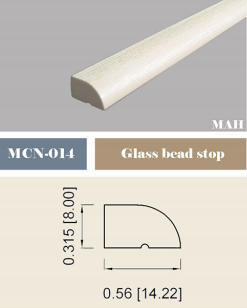
MCN-014 유리 비드 스톱은 문과 창문의 유리 패널을 고정, 위치 조정 및 밀봉하는 데 사용되는 전문적으로 설계된 유리 부품입니다. 유리와 프레임 사이에 설치되어 유리의 움직임을 방지하는 동시에 깔끔하고 장식적인 마감을 제공합니다. 주거용 및 상업용 문과 창문 시스템에 적합합니다.
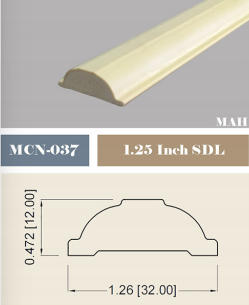
MCN-037 SDL은 1.25인치 모조 분할창 장식 스트립으로, 유리 표면에 직접 부착하여 전통적인 분할창의 외관을 재현합니다. 창 구조 전체를 교체하지 않고도 클래식한 다중 유리창 디자인을 연출할 수 있습니다. 깔끔한 프로파일은 다양한 건축 양식에 잘 어울립니다.
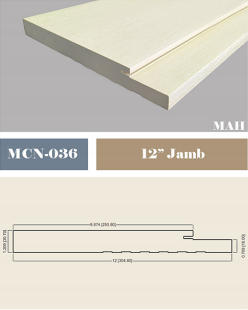
MCN-036 12인치 문틀은 두꺼운 벽이나 깊은 문/창문 개구부에 적합하도록 설계된 초광폭 문틀입니다. 넓은 프로파일로 문짝 가장자리에서 외벽까지 완전히 덮어 안정적인 문 지지력과 깔끔한 마감 처리를 제공합니다. 주거용, 상업용 및 산업용 건물에 모두 적합합니다.
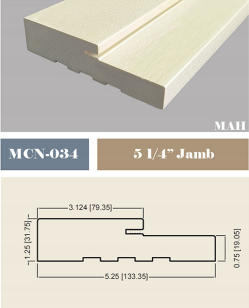
MCN-034 문틀은 5-1/4인치 두께의 문틀 프로파일로, 문과 창문 개구부의 측면 깊이를 완벽하게 덮어 문짝 가장자리부터 외벽까지 완전히 가려줍니다. 문짝을 안정적으로 고정하는 받침대 역할을 하며, 개구부의 마감을 깔끔하게 마무리해줍니다. 주거용 및 상업용 건물의 표준 및 두꺼운 벽체 문틀 시스템에 모두 적합합니다.
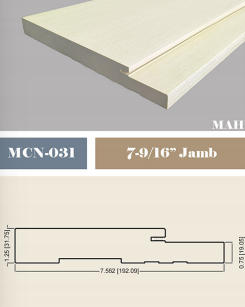
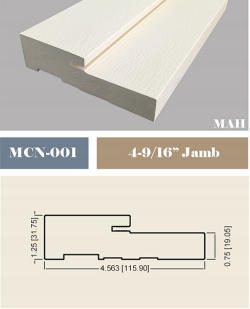
MCN-001 문틀은 4-9/16인치 두께의 문틀 프로파일로, 문과 창문 개구부의 측면 깊이를 완벽하게 덮어 문짝 가장자리부터 외벽까지 완전히 가려줍니다. 문짝을 안정적으로 고정하는 받침대 역할을 하며, 개구부의 마감을 깔끔하게 마무리해줍니다. 주거용 및 상업용 건물의 표준 벽면 문틀 시스템에 적합합니다.
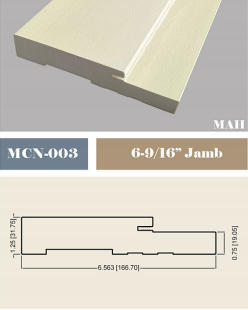
MCN-003 문틀은 6-9/16인치 두께의 문틀 프로파일로, 문과 창문 개구부의 측면 깊이를 완전히 덮어 문짝 가장자리부터 외벽까지 완벽한 마감을 제공합니다. 문짝을 안정적으로 고정하는 지지대 역할을 하며, 개구부의 가장자리를 깔끔하게 마감해줍니다. 특히 두꺼운 벽이나 외벽 단열 도어 프레임 시스템에 적합합니다.
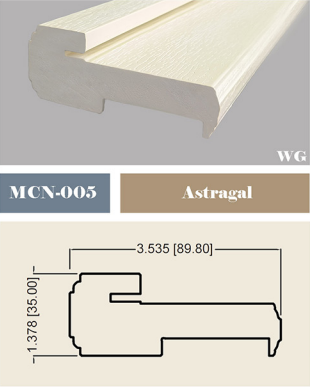
이 아스트라갈은 이중문(프랑스식 문/짝문)용으로 설계된 전문가용 문틀 부품입니다. 사용하지 않는 문짝 가장자리에 설치하여 두 문 사이의 틈을 가려 기밀성, 방음성, 사생활 보호 기능을 향상시키고 깔끔한 마감을 제공합니다.
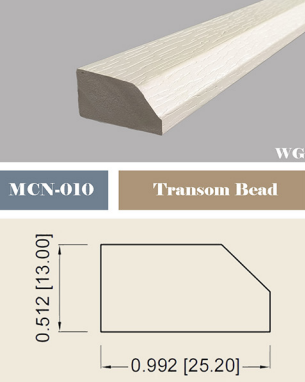
MCN-010 트랜섬 비드는 트랜섬 창(문 위쪽의 고정 창)을 위한 전문적인 디자인의 장식 마감재입니다. 트랜섬 부분의 장식 테두리, 유리 고정 또는 전환 마감재 역할을 합니다. 컴팩트한 비드 프로파일은 주거용 및 상업용 건물의 출입구에 세련된 디테일을 더해줍니다.
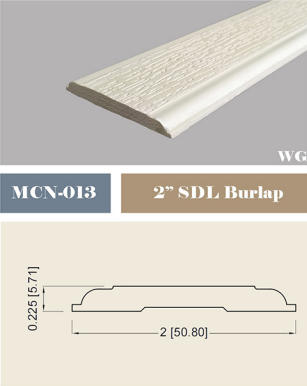
MCN-013 SDL 벌랩은 전통적인 분할창의 외관을 재현하기 위해 유리 표면에 직접 부착하도록 설계된 2인치 너비의 모조 분할창(SDL) 장식 스트립입니다. 2인치 너비는 더욱 굵고 견고한 격자 모양을 연출합니다. 벌랩 마감은 독특한 직물 질감을 제공하여 자연스럽고 소박한 장식적 매력을 더합니다.
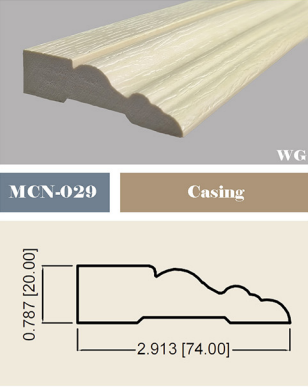
MCN-029 문틀 마감재는 문틀과 벽면 사이를 깔끔하게 마감해주는 전문적인 디자인의 제품입니다. 문틀과 벽면 사이의 틈을 가려주어 깔끔하고 완성도 높은 외관을 연출하며, 문틀 모서리의 손상을 방지합니다. 주거 공간 및 상업 공간의 실내 출입문에 적합합니다.
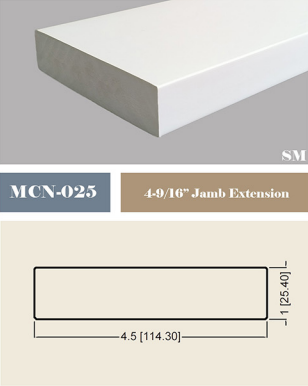
MCN-025 문틀 확장 키트는 두꺼운 벽에 맞춰 표준 문틀 깊이를 4-9/16인치 늘려주는 제품입니다. 벽 두께가 표준 문틀 규격을 초과할 경우, 이 확장 키트는 기존 문틀 가장자리에 매끄럽게 부착되어 문틀이 벽면과 평평하게 설치되도록 하고 깔끔한 마감의 완벽한 설치 기반을 제공합니다.
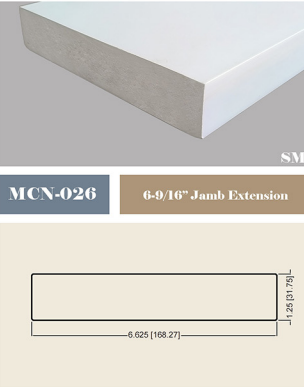
MCN-026 문틀 확장 키트는 두꺼운 벽에 맞춰 문틀 깊이를 6-9/16인치 늘려주는 제품입니다. 벽 두께가 표준 문틀 규격을 초과할 경우, 이 확장 키트는 기존 문틀 가장자리에 매끄럽게 부착되어 문틀이 벽면과 평평하게 설치되도록 하고 깔끔한 마감의 완벽한 장착 받침대를 제공합니다.
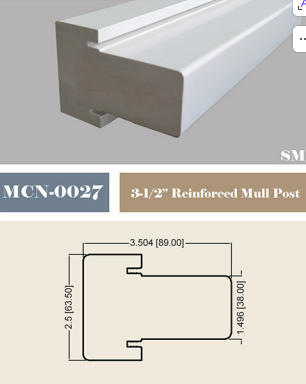
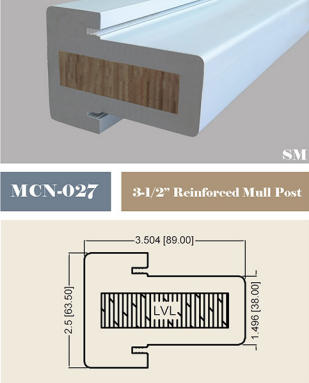
MCN-027 강화 멀 포스트는 3-1/2인치 수직 구조 부재로, 도어 및 창 시스템 결합용으로 설계되었습니다. 고정창, 여닫이창, 문, 측면창 등 인접한 유닛을 연결하고 고정하여 개구부의 안정성과 안전성을 확보하는 추가적인 구조적 강도를 제공합니다. 내장된 LVL(적층 베니어 목재) 보강재는 하중 지지력과 뒤틀림 저항성을 크게 향상시킵니다.
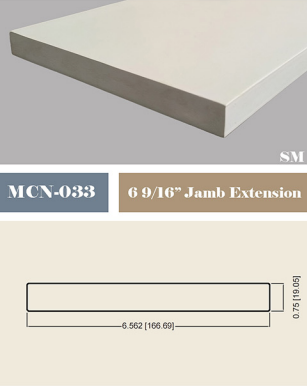
MCN-033 문틀 확장 키트는 두꺼운 벽에 맞춰 표준 문틀 깊이를 늘리기 위해 설계된 6-9/16인치(약 15.7mm) 확장 키트입니다. 벽 두께가 표준 문틀 규격을 초과할 경우, 이 확장 키트는 기존 문틀 가장자리에 매끄럽게 부착되어 문틀이 벽면과 평평하게 설치되도록 하고 깔끔한 마감의 완벽한 설치 기반을 제공합니다.
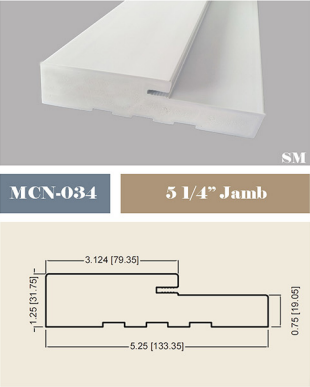
MCN-034 문틀 프로파일은 5-1/4인치 두께로, 문과 창문 개구부의 측면 깊이를 완전히 덮도록 설계되어 문짝 가장자리부터 외벽까지 완벽한 마감을 제공합니다. 문짝을 안정적으로 고정하는 지지대 역할을 하며, 개구부의 가장자리를 깔끔하게 마감해줍니다. 주거용 및 상업용 건물의 내외부 문틀 시스템에 모두 적합합니다.
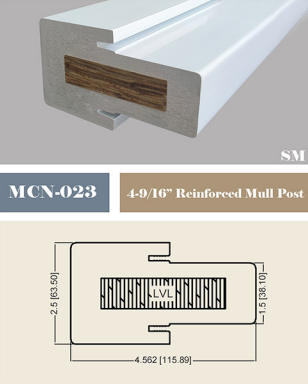
MCN-023 강화 멀 포스트는 4-9/16인치(11.7mm) 수직 구조 부재로, 도어 및 창 시스템을 결합하는 데 사용됩니다. 고정창, 여닫이창, 문, 측면창 등 인접한 유닛을 연결하고 고정하여 개구부의 안정성과 안전성을 확보하는 데 필요한 구조적 강도를 추가로 제공합니다. 내장된 LVL(적층 베니어 목재) 보강재는 하중 지지력과 뒤틀림 저항성을 크게 향상시킵니다.
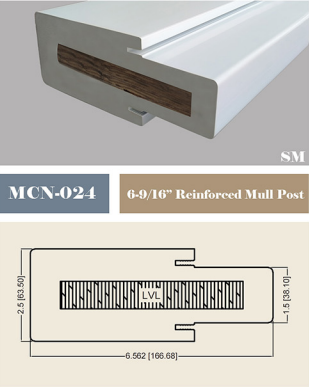
MCN-024 강화 멀 포스트는 6-9/16인치 수직 구조 부재로, 도어 및 창 시스템 결합용으로 설계되었습니다. 고정창, 여닫이창, 문, 측면창 등 인접한 유닛을 연결하고 고정하여 넓은 스팬의 개구부에 안정성과 안전성을 확보하는 추가적인 구조적 강도를 제공합니다.
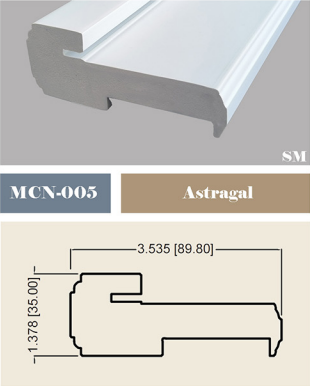
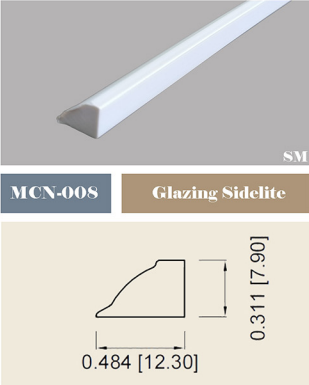
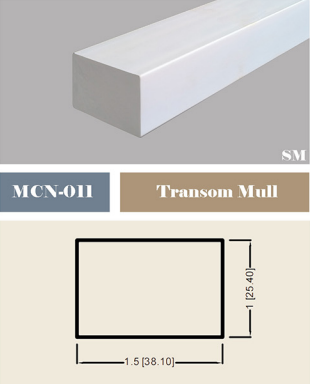
MCN-011 트랜섬 멀은 문과 그 위쪽의 트랜섬 창(측면창/반원형 채광창)을 분리하도록 설계된 전문가용 수평 프레임 부재입니다. 트랜섬에 구조적 지지력을 제공하는 동시에 깔끔한 시각적 구분선을 만들어주며, 주거용, 상업용 및 공공 건물 출입 시스템에 적합합니다.
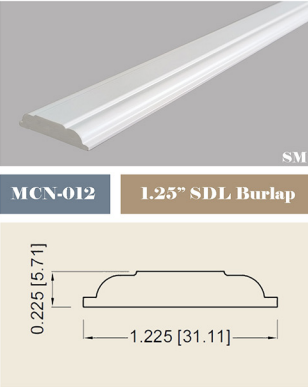
MCN-012 SDL 벌랩은 전통적인 분할창(SDL)의 외관을 재현하기 위해 유리 표면에 직접 부착하도록 설계된 모조 분할창 장식 스트립입니다. 창 구조 전체를 교체하지 않고도 클래식한 다중 유리창 디자인을 연출할 수 있습니다. 벌랩 마감은 독특한 직물 질감을 제공합니다.
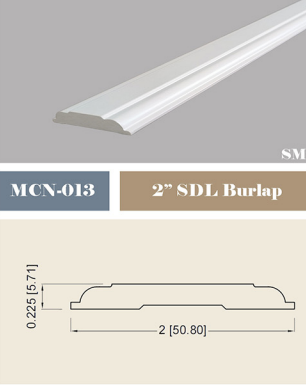
MCN-013 SDL 벌랩은 유리 표면에 직접 부착하여 전통적인 분할창의 외관을 재현하는 2인치 폭의 모조 분할창(SDL) 장식 스트립입니다. 더 좁은 버전과 비교했을 때, 2인치 폭은 더욱 굵고 견고한 격자 모양을 연출합니다. 벌랩 마감은 독특한 직물 질감을 제공하여 자연스럽고 소박한 장식적 매력을 더합니다.
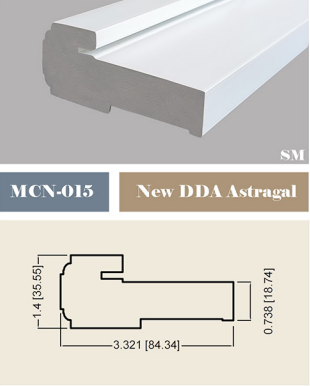
MCN-015 신형 DDA 아스트라갈은 장애인 차별 금지법(DDA) 기준을 충족하는 접근성 높은 이중문 시스템의 문틀 마감재입니다. 이 제품은 이중문의 사용하지 않는 쪽 문짝 가장자리에 설치되어 두 문짝 사이의 틈을 효과적으로 밀봉하는 동시에 개방력 및 틈 너비와 같은 접근성 요구 사항을 준수합니다.
Tel:
+86 18858129513