
소식
지금 바로 연락하세요Door Frame vs Door Jamb vs Casing for PVC Door Systems
-
 작가
작가
- 23 9월 2026

A replacement door frame request can mean the complete surround, one damaged jamb, or the visible trim. For door plants and wholesalers, that ambiguity risks supplying the wrong part. Following the opening from door to wall clarifies the difference: jambs locate the door, the frame joins those members, and casing finishes the surrounding gap.
The frame brings the working components together
A door frame is the assembled surround that receives the door panel. In a typical single swinging door, it includes two vertical side jambs and a horizontal head jamb. An exterior assembly also needs its specified bottom sill and sealing components. The swinging panel itself is a separate part.
The term PVC 문틀 identifies the frame material, but does not fully describe the supply scope. A package of uncut profiles, a machined jamb set, and an assembled frame are different products. Wholesale descriptions should make that distinction visible so a familiar product name does not conceal missing parts.
A useful frame description therefore names both the material and the assembly stage. It can then identify the side members, head, and any separately supplied trim. This gives the next person a clear picture of what belongs around the opening before individual dimensions enter the discussion.
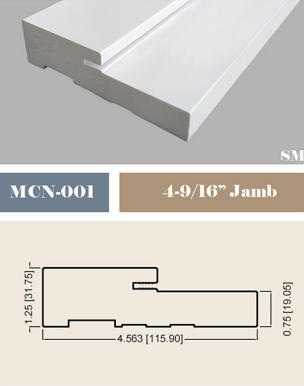
Jambs connect the door to the surrounding opening
The jamb is an individual frame member, rather than the decorative border on the wall. The hinge-side jamb carries the hinge attachment, while the opposite jamb receives the latch hardware. Above them, the head jamb completes the top of the frame. Their alignment determines how the door sits within that surround.
A PVC door jamb also spans the opening’s depth toward the wall finish. That second function explains why two jamb profiles can look similar from the front yet fit different wall constructions. The wide face seen when the door is open should not be confused with the narrow trim face seen when it is closed.
Trim cannot correct a faulty working frame. If a door rubs or the latch misses its strike, the jamb alignment and hardware need attention. Replacing a decorative strip may improve appearance, but it leaves the underlying relationship between the door and frame unchanged.

Jamb depth explains the two familiar profile sizes
The right PVC door frame size depends on which dimension is being discussed. Door opening width runs across the entrance; jamb depth runs through the wall. The familiar 4-9/16-inch and 6-9/16-inch profile descriptions refer to jamb depth, not the width of the doorway.
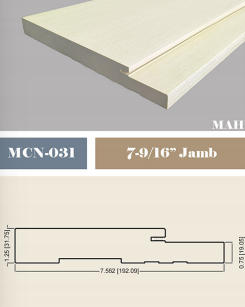
For a door plant handling different wall builds, a deeper jamb provides additional coverage through the opening. Xinhong New Materials offers the MCN-001 and MCN-003 PVC profiles for these different depth requirements. Their shared body thickness makes the comparison especially useful: greater depth does not mean a thicker profile body.
| Profile dimension | MCN-001 | MCN-003 |
| Nominal jamb depth | 4-9/16 inches | 6-9/16 inches |
| Overall depth | 115.90 mm | 166.70 mm |
| Main body thickness | 19.05 mm | 19.05 mm |
| Depth to door / backbend | 31.75 mm | 31.75 mm |
The deeper option adds 50.80 mm of coverage, calculated from the two overall depths. It can accommodate a deeper wall build where the complete detail matches. Neither size should be selected from the destination country alone; the finished wall thickness and profile geometry still need to agree.

Casing and brickmould finish the wall transition
Casing covers the joint between the frame and finished wall. It creates the visible border around the opening, while the jamb remains the working surface closer to the door. Interior casing and exterior trim share this finishing purpose, although their profiles and exposure requirements differ.
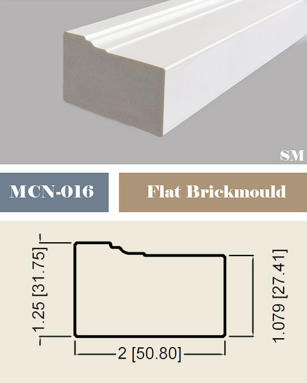
Brickmould is a form of exterior door casing. For the PVC jamb arrangement discussed here, matching MCN-016 Flat Brickmould provides the exterior transition. Its overall face width is 2 inches, or 50.80 mm, with a 1.25-inch, or 31.75 mm, wall-contact dimension. Those measurements describe trim geometry, not jamb depth.
The interior side has its own finishing component. For example, MCN-029 Casing has a 74.00 mm face width and 20.00 mm projection. Its wider visible face serves the frame-to-wall transition indoors. It should not be treated as an interchangeable substitute for the exterior Flat Brickmould simply because both pieces are called trim.
The threshold occupies a different position at the bottom of the opening. Flat Brickmould belongs around the exterior perimeter; it is not a threshold strip. Weather resistance also depends on the specified sill, flashing, seals, and their connections. A neat trim border alone does not establish a watertight door assembly.
Clear component names keep the assembly consistent
The practical distinction is between the assembled surround, its working members, and its finishing border. Once those roles are clear, dimensions become easier to interpret: jamb depth covers the wall build, while casing width covers the visible transition. Matching PVC jambs with Flat Brickmould preserves both functions without asking one component to replace another.
For the next profile review, compare the jamb and matching trim together against the intended wall detail. That keeps the discussion focused on the opening the finished components must serve.
자주 묻는 질문
Is a door jamb the same as a door frame?
A jamb is one member of the frame. Two side jambs and a head jamb form the main surround of a typical single door. A complete exterior assembly includes additional components, so the terms should not imply identical package contents.
What is an exterior door casing called?
Brickmould is a common exterior casing profile. It covers the transition between the door frame and exterior wall finish. Flat Brickmould is one profile option; its name does not mean the surrounding wall must be brick.
Does wider casing make a jamb deeper?
Wider casing covers more of the wall face. It does not extend the jamb through the opening. If the jamb falls short of the finished wall plane, the depth detail needs a suitable jamb or compatible extension solution.
How much bigger should the frame be than the door?
The required clearance depends on the door system and its hardware. Use the assembly’s specified clearances rather than treating a jamb-depth label as an opening allowance. Door panel size, frame outside size, and rough opening size are separate measurements.
Can Flat Brickmould replace the sill or threshold?
Flat Brickmould finishes the exterior perimeter. The sill and threshold serve the bottom of the opening and interact with the door’s bottom seal. They perform different jobs and must remain separate items in the assembly description.

제품
관련 상품
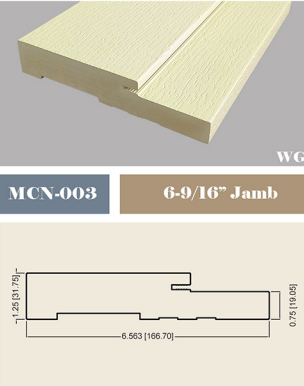
MCN-003 문틀은 6-9/16인치 두께의 문틀 프로파일로, 문과 창문 개구부의 측면 깊이를 완전히 덮어 문짝 가장자리부터 외벽까지 완벽한 마감을 제공합니다. 문짝을 안정적으로 고정하는 지지대 역할을 하며, 개구부의 가장자리를 깔끔하게 마감해줍니다. 특히 두꺼운 벽이나 외벽 단열 도어 프레임 시스템에 적합합니다.
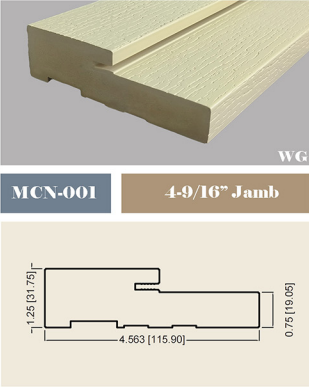
MCN-001 문틀은 4-9/16인치 두께의 문틀 프로파일로, 문과 창문 개구부의 측면 깊이를 완벽하게 덮어 문짝 가장자리부터 외벽까지 완전히 가려줍니다. 문짝을 안정적으로 고정하는 받침대 역할을 하며, 개구부의 마감을 깔끔하게 마무리해줍니다. 주거용 및 상업용 건물의 표준 벽면 문틀 시스템에 적합합니다.
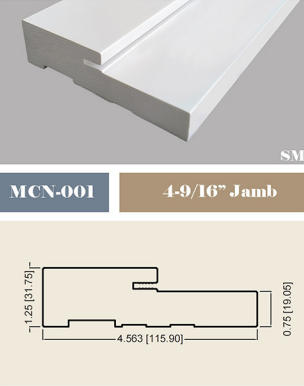
MCN-001 문틀은 4-9/16인치 두께의 문틀 프로파일로, 문과 창문 개구부의 측면 깊이를 완벽하게 덮어 문짝 가장자리부터 외벽까지 완전히 가려줍니다. 문짝을 안정적으로 고정하는 받침대 역할을 하며, 개구부의 마감을 깔끔하게 마무리해줍니다. 주거용 및 상업용 건물의 표준 벽면 문틀 시스템에 적합합니다.
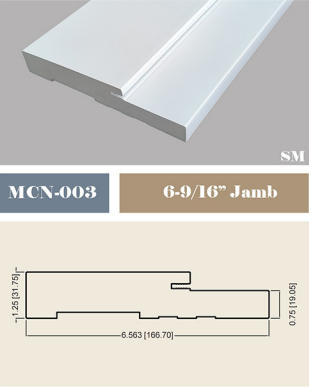
MCN-003 문틀은 6-9/16인치 두께의 문틀 프로파일로, 문과 창문 개구부의 측면 깊이를 완전히 덮어 문짝 가장자리부터 외벽까지 완벽한 마감을 제공합니다. 문짝을 안정적으로 고정하는 지지대 역할을 하며, 개구부의 가장자리를 깔끔하게 마감해줍니다. 특히 두꺼운 벽이나 외벽 단열 도어 프레임 시스템에 적합합니다.
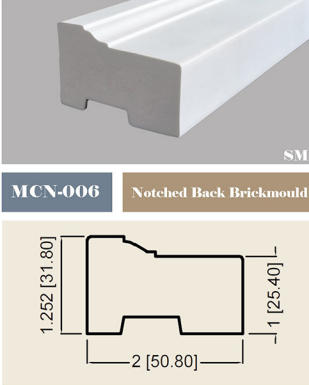
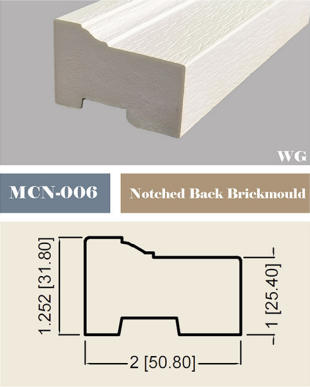
MCN-006 노치형 뒷면 브릭몰드는 문틀 및 창틀용으로 사용되는 고급 외장 마감재입니다. 뒷면의 노치 디자인 덕분에 벽돌, 스터코 또는 사이딩에 더욱 밀착되게 시공할 수 있습니다. WG 시리즈 브릭몰드는 다양한 벽 두께와 용도에 맞춰 슬림하게 제작되었습니다.
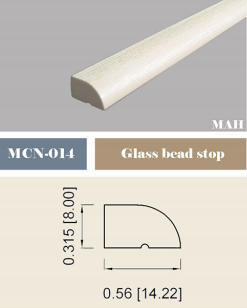
MCN-014 유리 비드 스톱은 문과 창문의 유리 패널을 고정, 위치 조정 및 밀봉하는 데 사용되는 전문적으로 설계된 유리 부품입니다. 유리와 프레임 사이에 설치되어 유리의 움직임을 방지하는 동시에 깔끔하고 장식적인 마감을 제공합니다. 주거용 및 상업용 문과 창문 시스템에 적합합니다.
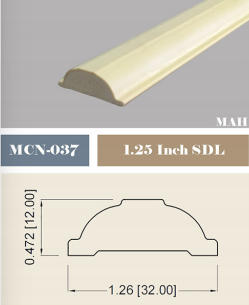
MCN-037 SDL은 1.25인치 모조 분할창 장식 스트립으로, 유리 표면에 직접 부착하여 전통적인 분할창의 외관을 재현합니다. 창 구조 전체를 교체하지 않고도 클래식한 다중 유리창 디자인을 연출할 수 있습니다. 깔끔한 프로파일은 다양한 건축 양식에 잘 어울립니다.
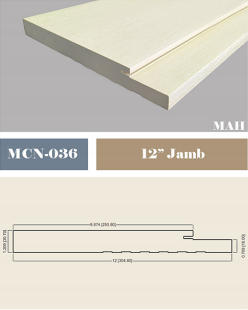
MCN-036 12인치 문틀은 두꺼운 벽이나 깊은 문/창문 개구부에 적합하도록 설계된 초광폭 문틀입니다. 넓은 프로파일로 문짝 가장자리에서 외벽까지 완전히 덮어 안정적인 문 지지력과 깔끔한 마감 처리를 제공합니다. 주거용, 상업용 및 산업용 건물에 모두 적합합니다.
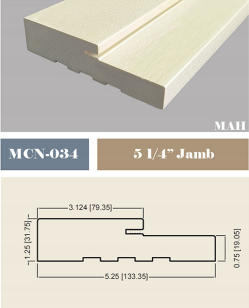
MCN-034 문틀은 5-1/4인치 두께의 문틀 프로파일로, 문과 창문 개구부의 측면 깊이를 완벽하게 덮어 문짝 가장자리부터 외벽까지 완전히 가려줍니다. 문짝을 안정적으로 고정하는 받침대 역할을 하며, 개구부의 마감을 깔끔하게 마무리해줍니다. 주거용 및 상업용 건물의 표준 및 두꺼운 벽체 문틀 시스템에 모두 적합합니다.
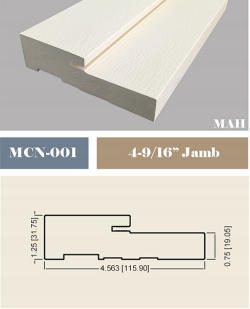
MCN-001 문틀은 4-9/16인치 두께의 문틀 프로파일로, 문과 창문 개구부의 측면 깊이를 완벽하게 덮어 문짝 가장자리부터 외벽까지 완전히 가려줍니다. 문짝을 안정적으로 고정하는 받침대 역할을 하며, 개구부의 마감을 깔끔하게 마무리해줍니다. 주거용 및 상업용 건물의 표준 벽면 문틀 시스템에 적합합니다.
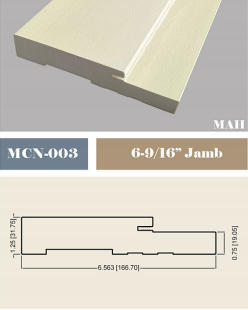
MCN-003 문틀은 6-9/16인치 두께의 문틀 프로파일로, 문과 창문 개구부의 측면 깊이를 완전히 덮어 문짝 가장자리부터 외벽까지 완벽한 마감을 제공합니다. 문짝을 안정적으로 고정하는 지지대 역할을 하며, 개구부의 가장자리를 깔끔하게 마감해줍니다. 특히 두꺼운 벽이나 외벽 단열 도어 프레임 시스템에 적합합니다.
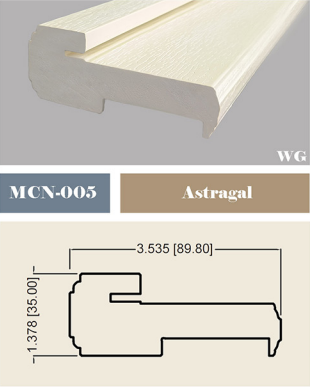
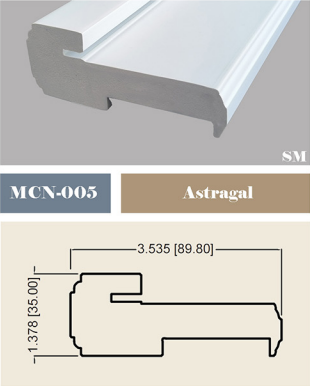
이 아스트라갈은 이중문(프랑스식 문/짝문)용으로 설계된 전문가용 문틀 부품입니다. 사용하지 않는 문짝 가장자리에 설치하여 두 문 사이의 틈을 가려 기밀성, 방음성, 사생활 보호 기능을 향상시키고 깔끔한 마감을 제공합니다.
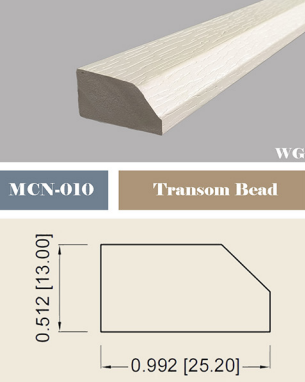
MCN-010 트랜섬 비드는 트랜섬 창(문 위쪽의 고정 창)을 위한 전문적인 디자인의 장식 마감재입니다. 트랜섬 부분의 장식 테두리, 유리 고정 또는 전환 마감재 역할을 합니다. 컴팩트한 비드 프로파일은 주거용 및 상업용 건물의 출입구에 세련된 디테일을 더해줍니다.
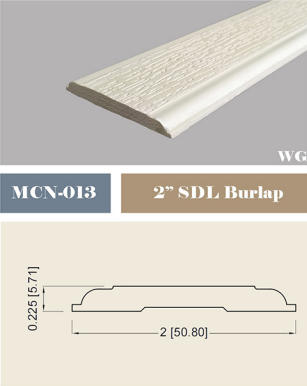
MCN-013 SDL 벌랩은 전통적인 분할창의 외관을 재현하기 위해 유리 표면에 직접 부착하도록 설계된 2인치 너비의 모조 분할창(SDL) 장식 스트립입니다. 2인치 너비는 더욱 굵고 견고한 격자 모양을 연출합니다. 벌랩 마감은 독특한 직물 질감을 제공하여 자연스럽고 소박한 장식적 매력을 더합니다.
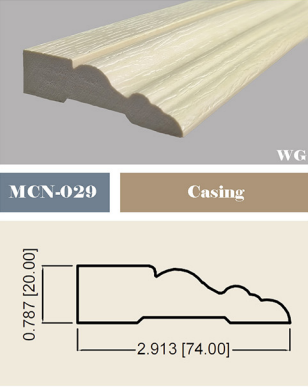
MCN-029 문틀 마감재는 문틀과 벽면 사이를 깔끔하게 마감해주는 전문적인 디자인의 제품입니다. 문틀과 벽면 사이의 틈을 가려주어 깔끔하고 완성도 높은 외관을 연출하며, 문틀 모서리의 손상을 방지합니다. 주거 공간 및 상업 공간의 실내 출입문에 적합합니다.
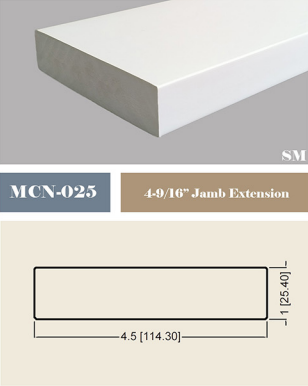
MCN-025 문틀 확장 키트는 두꺼운 벽에 맞춰 표준 문틀 깊이를 4-9/16인치 늘려주는 제품입니다. 벽 두께가 표준 문틀 규격을 초과할 경우, 이 확장 키트는 기존 문틀 가장자리에 매끄럽게 부착되어 문틀이 벽면과 평평하게 설치되도록 하고 깔끔한 마감의 완벽한 설치 기반을 제공합니다.
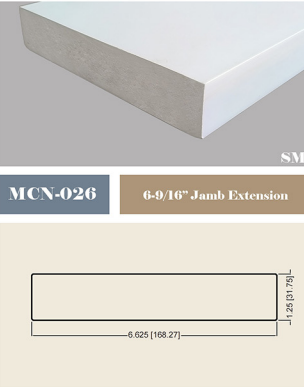
MCN-026 문틀 확장 키트는 두꺼운 벽에 맞춰 문틀 깊이를 6-9/16인치 늘려주는 제품입니다. 벽 두께가 표준 문틀 규격을 초과할 경우, 이 확장 키트는 기존 문틀 가장자리에 매끄럽게 부착되어 문틀이 벽면과 평평하게 설치되도록 하고 깔끔한 마감의 완벽한 장착 받침대를 제공합니다.
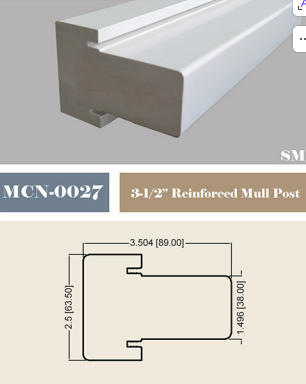
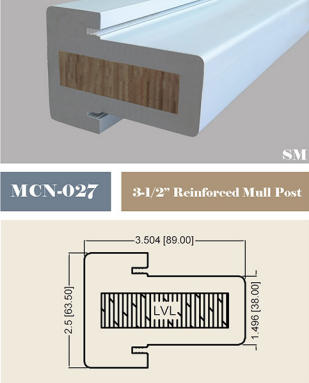
MCN-027 강화 멀 포스트는 3-1/2인치 수직 구조 부재로, 도어 및 창 시스템 결합용으로 설계되었습니다. 고정창, 여닫이창, 문, 측면창 등 인접한 유닛을 연결하고 고정하여 개구부의 안정성과 안전성을 확보하는 추가적인 구조적 강도를 제공합니다. 내장된 LVL(적층 베니어 목재) 보강재는 하중 지지력과 뒤틀림 저항성을 크게 향상시킵니다.
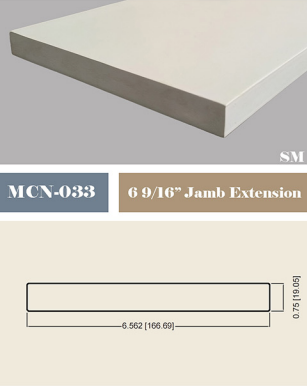
MCN-033 문틀 확장 키트는 두꺼운 벽에 맞춰 표준 문틀 깊이를 늘리기 위해 설계된 6-9/16인치(약 15.7mm) 확장 키트입니다. 벽 두께가 표준 문틀 규격을 초과할 경우, 이 확장 키트는 기존 문틀 가장자리에 매끄럽게 부착되어 문틀이 벽면과 평평하게 설치되도록 하고 깔끔한 마감의 완벽한 설치 기반을 제공합니다.
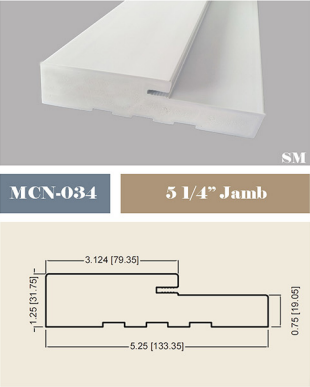
MCN-034 문틀 프로파일은 5-1/4인치 두께로, 문과 창문 개구부의 측면 깊이를 완전히 덮도록 설계되어 문짝 가장자리부터 외벽까지 완벽한 마감을 제공합니다. 문짝을 안정적으로 고정하는 지지대 역할을 하며, 개구부의 가장자리를 깔끔하게 마감해줍니다. 주거용 및 상업용 건물의 내외부 문틀 시스템에 모두 적합합니다.
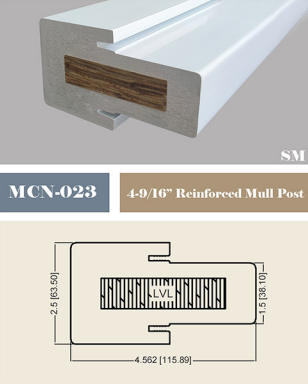
MCN-023 강화 멀 포스트는 4-9/16인치(11.7mm) 수직 구조 부재로, 도어 및 창 시스템을 결합하는 데 사용됩니다. 고정창, 여닫이창, 문, 측면창 등 인접한 유닛을 연결하고 고정하여 개구부의 안정성과 안전성을 확보하는 데 필요한 구조적 강도를 추가로 제공합니다. 내장된 LVL(적층 베니어 목재) 보강재는 하중 지지력과 뒤틀림 저항성을 크게 향상시킵니다.
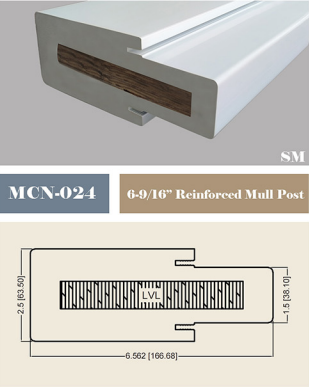
MCN-024 강화 멀 포스트는 6-9/16인치 수직 구조 부재로, 도어 및 창 시스템 결합용으로 설계되었습니다. 고정창, 여닫이창, 문, 측면창 등 인접한 유닛을 연결하고 고정하여 넓은 스팬의 개구부에 안정성과 안전성을 확보하는 추가적인 구조적 강도를 제공합니다.
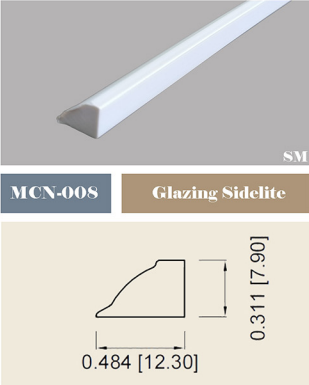
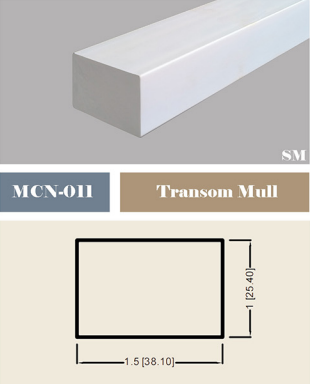
MCN-011 트랜섬 멀은 문과 그 위쪽의 트랜섬 창(측면창/반원형 채광창)을 분리하도록 설계된 전문가용 수평 프레임 부재입니다. 트랜섬에 구조적 지지력을 제공하는 동시에 깔끔한 시각적 구분선을 만들어주며, 주거용, 상업용 및 공공 건물 출입 시스템에 적합합니다.
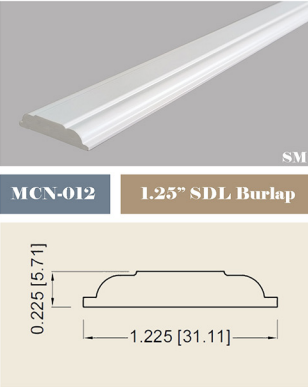
MCN-012 SDL 벌랩은 전통적인 분할창(SDL)의 외관을 재현하기 위해 유리 표면에 직접 부착하도록 설계된 모조 분할창 장식 스트립입니다. 창 구조 전체를 교체하지 않고도 클래식한 다중 유리창 디자인을 연출할 수 있습니다. 벌랩 마감은 독특한 직물 질감을 제공합니다.
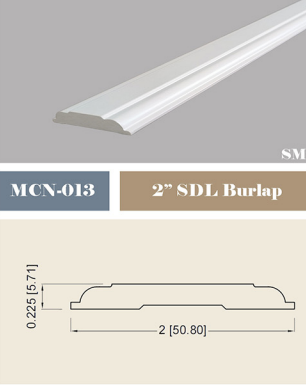
MCN-013 SDL 벌랩은 유리 표면에 직접 부착하여 전통적인 분할창의 외관을 재현하는 2인치 폭의 모조 분할창(SDL) 장식 스트립입니다. 더 좁은 버전과 비교했을 때, 2인치 폭은 더욱 굵고 견고한 격자 모양을 연출합니다. 벌랩 마감은 독특한 직물 질감을 제공하여 자연스럽고 소박한 장식적 매력을 더합니다.
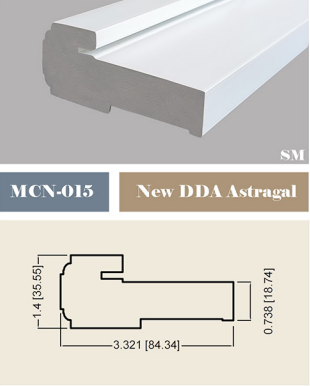
MCN-015 신형 DDA 아스트라갈은 장애인 차별 금지법(DDA) 기준을 충족하는 접근성 높은 이중문 시스템의 문틀 마감재입니다. 이 제품은 이중문의 사용하지 않는 쪽 문짝 가장자리에 설치되어 두 문짝 사이의 틈을 효과적으로 밀봉하는 동시에 개방력 및 틈 너비와 같은 접근성 요구 사항을 준수합니다.
Tel:
+86 18858129513