
소식
지금 바로 연락하세요Why PVC Jambs Reduce Door Plant Callbacks
-
 작가
작가
- 07 10월 2026

Callbacks quietly drain profit because they arrive after a door has already been sold, shipped, installed, and judged by someone else’s customer. For prehung door plants, many of those calls begin at the jamb. When a frame swells, cracks, absorbs moisture, or loses screw grip, the finished door looks like the problem even when the slab is sound. A better jamb material helps protect margin, production rhythm, and brand reputation at the same time.
The callback often starts before the service call
A door plant pays for frame trouble twice. The first cost appears in production, where workers sort bowed pieces, adjust joints, or slow the line. The second appears later, when a dealer or builder reports gaps, rubbing, soft spots near the sill, or movement after weather exposure.
Wood jambs can perform well when they stay dry and straight, but exterior openings rarely give them perfect conditions. Rain splash, snow melt, wet thresholds, humid storage, and jobsite delays all put stress on the lower frame. Once the frame changes shape, a small defect can turn into a field complaint that takes hours of coordination to resolve.

PVC changes the weak point in exterior assemblies
에이 door jamb PVC profile addresses the failure pattern because the material does not rely on natural grain. High-molecular polymer PVC gives the frame a more uniform structure from piece to piece, so the plant is not building around knots, variable density, or moisture-sensitive fibers. That uniformity matters when a frame must be cut, nailed, joined, packed, shipped, and installed as part of a finished door unit.
The practical advantage is that a stable frame helps the entire assembly stay predictable. Hinges, lock prep, corner joints, brickmould transitions, and sill contact all depend on the jamb holding its shape after the unit leaves the factory.
Moisture resistance protects the bottom of the frame
Exterior callbacks appear near the sill because that area faces the most water. For an exterior door with PVC jamb, resistance to rot, rust, termites, and moisture damage is most useful around rainy regions, humid environments, and renovation openings.
Consistent hardness supports repeatable fastening
Fastener holding is another reason door plants look closely at pvc door jamb material. Xinhong New Materials produces PVC profile material with HD surface hardness around 80-85 and nail-holding strength around 2200-2300N. Those figures matter because a prehung door needs the hinge side, strike side, and trim connection to stay firm through handling and use.
| Callback trigger | How it reaches the plant | PVC jamb contribution |
| Frame swelling near the sill | Door rubs, gaps change, or the dealer asks for adjustment | Moisture-resistant material reduces rot and swelling risk |
| Cracking or splitting during fastening | Scrapped parts, rework, or weak hinge/trim connection | Uniform extruded material supports cleaner cutting and fastening |
| Inconsistent frame straightness | Assembly slows while workers sort or compensate | Standardized profiles help keep production flow predictable |
| Visible deterioration after exposure | The door brand absorbs the complaint even if weather caused it | Low-maintenance PVC helps protect exterior appearance |

The plant benefit is steadier output
A callback reduction strategy should also help daily production. PVC profiles can be supplied in common jamb sizes such as 3-1/2, 4-9/16, 5-1/4, 6-9/16, and 7-9/16 inches, with long stock lengths for plant cutting plans. This range lets a manufacturer match regional wall depths without turning every order into a material exception.
North American orders often split by market language and wall depth. The United States commonly uses PVC door frame terminology and often works with 4-9/16 inch profiles, while a PVC exterior door jamb program for Canada often needs 6-9/16 inch components.
Fewer exceptions help automated work stay clean
Line workers can move faster when the frame behaves the same way through cutting, machining, and assembly. Xinhong New Materials has 20 PVC profile lines, 50 independently developed molds, and an automated door-frame engraving machine, so large programs can be planned around repeatable profile supply.
- Stable profile geometry helps reduce adjustment during jamb cutting and corner preparation.
- Moisture-resistant material lowers the chance that stored or shipped frames arrive compromised.
- Smooth and woodgrain finish options let the plant support different door programs without painting every frame.
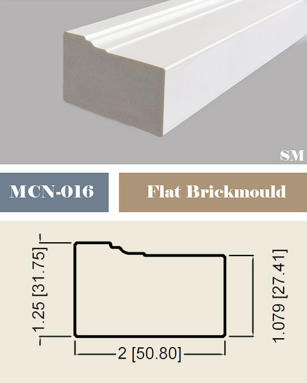
- Matching jamb, extension, and Flat Brickmould components reduce mismatch at the exterior trim edge.
Cost control improves when callbacks become rarer
The real cost of a bad frame is rarely limited to the replacement part. A single complaint can involve dealer emails, photos, plant review, remake planning, freight, labor credit, and reputation loss. For a door manufacturer, those indirect costs can erase the savings from a cheaper but less stable frame material.
에이 prehung exterior door pvc frame helps protect the finished unit because it brings the frame, trim, and sill area into a more durable material family. Xinhong New Materials also supports OEM and ODM programs for major clients, with 24-hour response and urgent bulk delivery capability when timing becomes tight.
Price still matters, especially for high-volume door programs. The better comparison is total cost per accepted unit. If a low-priced frame creates rework or field complaints, the saving becomes fragile. When the same quality level can be held at a competitive price, the plant has more room to protect margin.
A practical takeaway for door manufacturers
PVC jambs reduce callbacks by attacking the frame failures that most often become service work: moisture deterioration, shape movement, weak fastening, and inconsistent production behavior. The material does not remove the need for good assembly, careful sill matching, or proper installation, but it gives the finished prehung unit a more stable starting point.
For door plants serving U.S. and Canadian programs, the next sensible step is to review which jamb sizes, finishes, and matching Flat Brickmould profiles carry the highest callback exposure, then standardize those openings around a moisture-resistant PVC system that can be repeated at volume.
자주 묻는 질문
Can PVC jambs completely eliminate door callbacks
PVC jambs cannot eliminate every callback because installation, wall conditions, hardware adjustment, and weather exposure still matter. They can reduce material-related complaints by resisting moisture, rot, and shape instability better than many wood-frame situations.
Why do prehung door plants use PVC jambs for exterior doors
Prehung door plants use PVC jambs because exterior openings expose frames to water, humidity, insects, and repeated handling. A stable PVC frame helps the finished unit keep better alignment from production through delivery and installation.
Is PVC door jamb material suitable for Canada
PVC door jamb material is widely relevant for Canadian-style exterior programs because 6-9/16 inch jamb depths are common there and moisture resistance is valuable in snow, rain, and freeze-thaw conditions. Specific project testing should still be confirmed.
What sizes matter most for U.S. and Canadian orders
U.S. exterior programs often use 4-9/16 inch PVC door frame profiles, while Canadian programs often use 6-9/16 inch PVC door jamb profiles. Plants serving both markets usually benefit from keeping both sizes coordinated.
Should Flat Brickmould be planned with the jamb
Flat Brickmould should be planned with the jamb because the exterior trim edge affects appearance, weather exposure, and fit against brick, stone, stucco, or siding. Matching components reduce avoidable gaps and field improvisation.
이전 게시물:How PVC Door Frames Keep Entrances Consistent
다음 게시물: 다음 게시물이 없습니다

제품
관련 상품
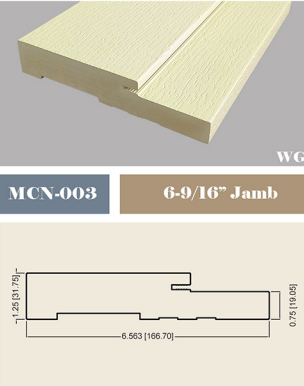
MCN-003 문틀은 6-9/16인치 두께의 문틀 프로파일로, 문과 창문 개구부의 측면 깊이를 완전히 덮어 문짝 가장자리부터 외벽까지 완벽한 마감을 제공합니다. 문짝을 안정적으로 고정하는 지지대 역할을 하며, 개구부의 가장자리를 깔끔하게 마감해줍니다. 특히 두꺼운 벽이나 외벽 단열 도어 프레임 시스템에 적합합니다.
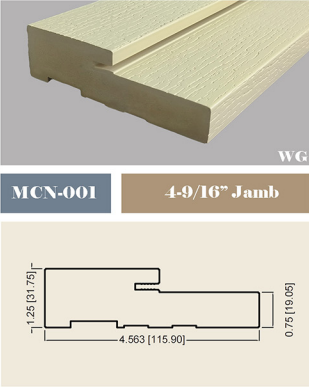
MCN-001 문틀은 4-9/16인치 두께의 문틀 프로파일로, 문과 창문 개구부의 측면 깊이를 완벽하게 덮어 문짝 가장자리부터 외벽까지 완전히 가려줍니다. 문짝을 안정적으로 고정하는 받침대 역할을 하며, 개구부의 마감을 깔끔하게 마무리해줍니다. 주거용 및 상업용 건물의 표준 벽면 문틀 시스템에 적합합니다.
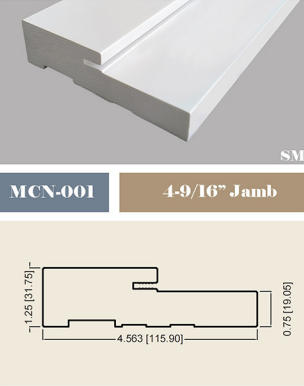
MCN-001 문틀은 4-9/16인치 두께의 문틀 프로파일로, 문과 창문 개구부의 측면 깊이를 완벽하게 덮어 문짝 가장자리부터 외벽까지 완전히 가려줍니다. 문짝을 안정적으로 고정하는 받침대 역할을 하며, 개구부의 마감을 깔끔하게 마무리해줍니다. 주거용 및 상업용 건물의 표준 벽면 문틀 시스템에 적합합니다.
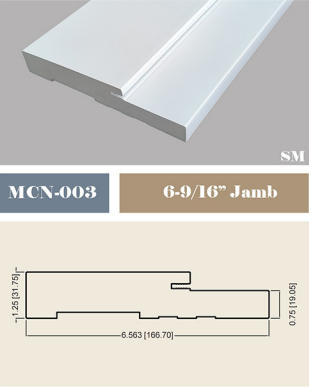
MCN-003 문틀은 6-9/16인치 두께의 문틀 프로파일로, 문과 창문 개구부의 측면 깊이를 완전히 덮어 문짝 가장자리부터 외벽까지 완벽한 마감을 제공합니다. 문짝을 안정적으로 고정하는 지지대 역할을 하며, 개구부의 가장자리를 깔끔하게 마감해줍니다. 특히 두꺼운 벽이나 외벽 단열 도어 프레임 시스템에 적합합니다.
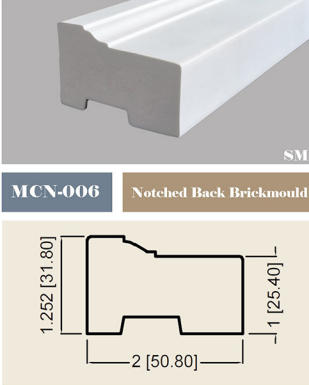
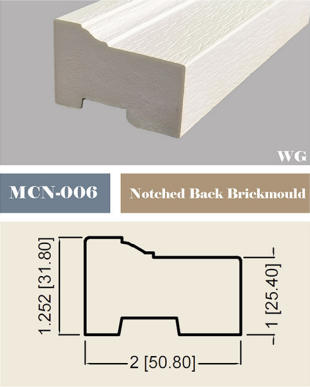
MCN-006 노치형 뒷면 브릭몰드는 문틀 및 창틀용으로 사용되는 고급 외장 마감재입니다. 뒷면의 노치 디자인 덕분에 벽돌, 스터코 또는 사이딩에 더욱 밀착되게 시공할 수 있습니다. WG 시리즈 브릭몰드는 다양한 벽 두께와 용도에 맞춰 슬림하게 제작되었습니다.
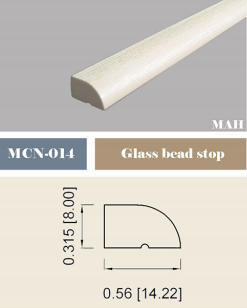
MCN-014 유리 비드 스톱은 문과 창문의 유리 패널을 고정, 위치 조정 및 밀봉하는 데 사용되는 전문적으로 설계된 유리 부품입니다. 유리와 프레임 사이에 설치되어 유리의 움직임을 방지하는 동시에 깔끔하고 장식적인 마감을 제공합니다. 주거용 및 상업용 문과 창문 시스템에 적합합니다.
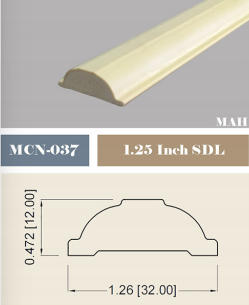
MCN-037 SDL은 1.25인치 모조 분할창 장식 스트립으로, 유리 표면에 직접 부착하여 전통적인 분할창의 외관을 재현합니다. 창 구조 전체를 교체하지 않고도 클래식한 다중 유리창 디자인을 연출할 수 있습니다. 깔끔한 프로파일은 다양한 건축 양식에 잘 어울립니다.
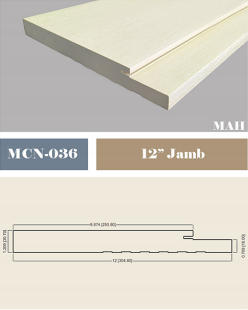
MCN-036 12인치 문틀은 두꺼운 벽이나 깊은 문/창문 개구부에 적합하도록 설계된 초광폭 문틀입니다. 넓은 프로파일로 문짝 가장자리에서 외벽까지 완전히 덮어 안정적인 문 지지력과 깔끔한 마감 처리를 제공합니다. 주거용, 상업용 및 산업용 건물에 모두 적합합니다.
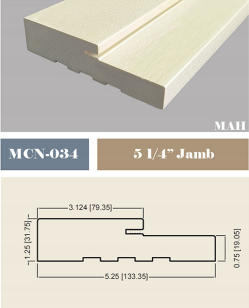
MCN-034 문틀은 5-1/4인치 두께의 문틀 프로파일로, 문과 창문 개구부의 측면 깊이를 완벽하게 덮어 문짝 가장자리부터 외벽까지 완전히 가려줍니다. 문짝을 안정적으로 고정하는 받침대 역할을 하며, 개구부의 마감을 깔끔하게 마무리해줍니다. 주거용 및 상업용 건물의 표준 및 두꺼운 벽체 문틀 시스템에 모두 적합합니다.
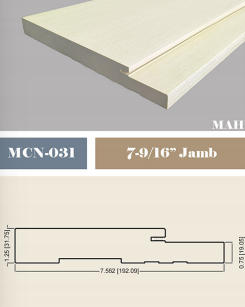
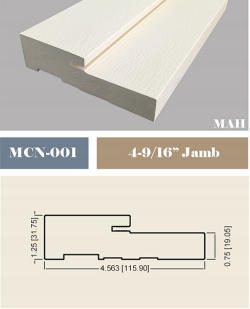
MCN-001 문틀은 4-9/16인치 두께의 문틀 프로파일로, 문과 창문 개구부의 측면 깊이를 완벽하게 덮어 문짝 가장자리부터 외벽까지 완전히 가려줍니다. 문짝을 안정적으로 고정하는 받침대 역할을 하며, 개구부의 마감을 깔끔하게 마무리해줍니다. 주거용 및 상업용 건물의 표준 벽면 문틀 시스템에 적합합니다.
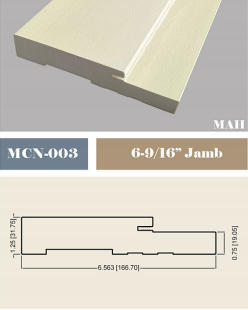
MCN-003 문틀은 6-9/16인치 두께의 문틀 프로파일로, 문과 창문 개구부의 측면 깊이를 완전히 덮어 문짝 가장자리부터 외벽까지 완벽한 마감을 제공합니다. 문짝을 안정적으로 고정하는 지지대 역할을 하며, 개구부의 가장자리를 깔끔하게 마감해줍니다. 특히 두꺼운 벽이나 외벽 단열 도어 프레임 시스템에 적합합니다.
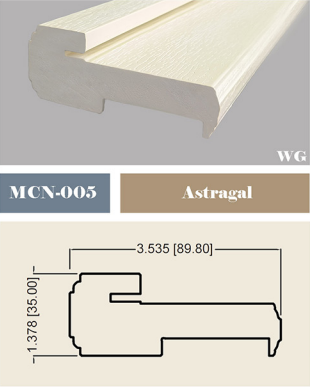
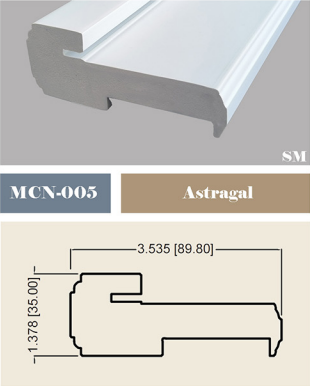
이 아스트라갈은 이중문(프랑스식 문/짝문)용으로 설계된 전문가용 문틀 부품입니다. 사용하지 않는 문짝 가장자리에 설치하여 두 문 사이의 틈을 가려 기밀성, 방음성, 사생활 보호 기능을 향상시키고 깔끔한 마감을 제공합니다.
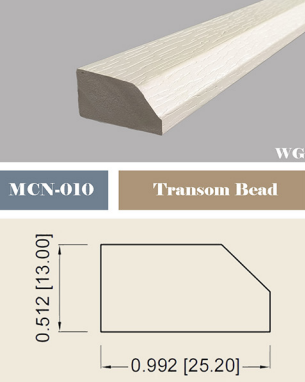
MCN-010 트랜섬 비드는 트랜섬 창(문 위쪽의 고정 창)을 위한 전문적인 디자인의 장식 마감재입니다. 트랜섬 부분의 장식 테두리, 유리 고정 또는 전환 마감재 역할을 합니다. 컴팩트한 비드 프로파일은 주거용 및 상업용 건물의 출입구에 세련된 디테일을 더해줍니다.
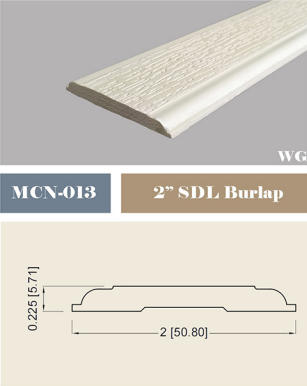
MCN-013 SDL 벌랩은 전통적인 분할창의 외관을 재현하기 위해 유리 표면에 직접 부착하도록 설계된 2인치 너비의 모조 분할창(SDL) 장식 스트립입니다. 2인치 너비는 더욱 굵고 견고한 격자 모양을 연출합니다. 벌랩 마감은 독특한 직물 질감을 제공하여 자연스럽고 소박한 장식적 매력을 더합니다.
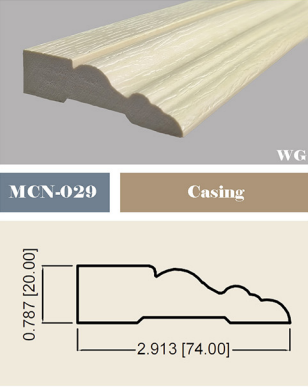
MCN-029 문틀 마감재는 문틀과 벽면 사이를 깔끔하게 마감해주는 전문적인 디자인의 제품입니다. 문틀과 벽면 사이의 틈을 가려주어 깔끔하고 완성도 높은 외관을 연출하며, 문틀 모서리의 손상을 방지합니다. 주거 공간 및 상업 공간의 실내 출입문에 적합합니다.
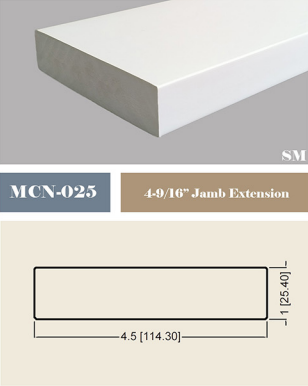
MCN-025 문틀 확장 키트는 두꺼운 벽에 맞춰 표준 문틀 깊이를 4-9/16인치 늘려주는 제품입니다. 벽 두께가 표준 문틀 규격을 초과할 경우, 이 확장 키트는 기존 문틀 가장자리에 매끄럽게 부착되어 문틀이 벽면과 평평하게 설치되도록 하고 깔끔한 마감의 완벽한 설치 기반을 제공합니다.
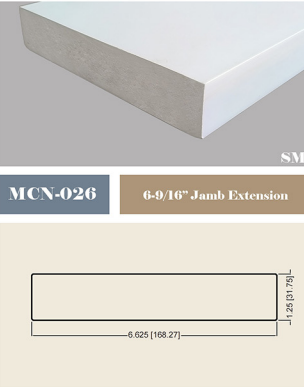
MCN-026 문틀 확장 키트는 두꺼운 벽에 맞춰 문틀 깊이를 6-9/16인치 늘려주는 제품입니다. 벽 두께가 표준 문틀 규격을 초과할 경우, 이 확장 키트는 기존 문틀 가장자리에 매끄럽게 부착되어 문틀이 벽면과 평평하게 설치되도록 하고 깔끔한 마감의 완벽한 장착 받침대를 제공합니다.
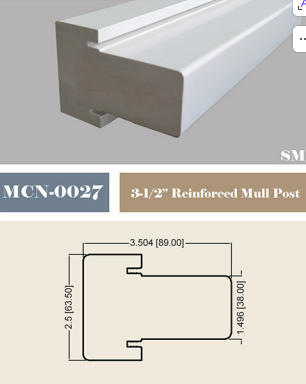
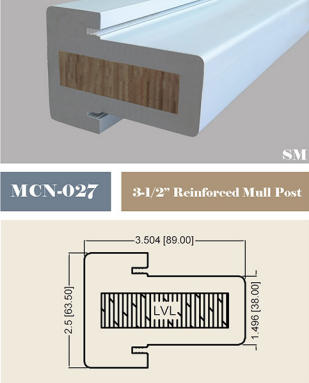
MCN-027 강화 멀 포스트는 3-1/2인치 수직 구조 부재로, 도어 및 창 시스템 결합용으로 설계되었습니다. 고정창, 여닫이창, 문, 측면창 등 인접한 유닛을 연결하고 고정하여 개구부의 안정성과 안전성을 확보하는 추가적인 구조적 강도를 제공합니다. 내장된 LVL(적층 베니어 목재) 보강재는 하중 지지력과 뒤틀림 저항성을 크게 향상시킵니다.
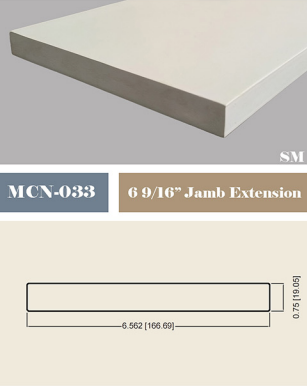
MCN-033 문틀 확장 키트는 두꺼운 벽에 맞춰 표준 문틀 깊이를 늘리기 위해 설계된 6-9/16인치(약 15.7mm) 확장 키트입니다. 벽 두께가 표준 문틀 규격을 초과할 경우, 이 확장 키트는 기존 문틀 가장자리에 매끄럽게 부착되어 문틀이 벽면과 평평하게 설치되도록 하고 깔끔한 마감의 완벽한 설치 기반을 제공합니다.
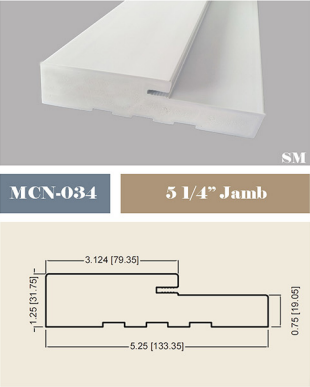
MCN-034 문틀 프로파일은 5-1/4인치 두께로, 문과 창문 개구부의 측면 깊이를 완전히 덮도록 설계되어 문짝 가장자리부터 외벽까지 완벽한 마감을 제공합니다. 문짝을 안정적으로 고정하는 지지대 역할을 하며, 개구부의 가장자리를 깔끔하게 마감해줍니다. 주거용 및 상업용 건물의 내외부 문틀 시스템에 모두 적합합니다.
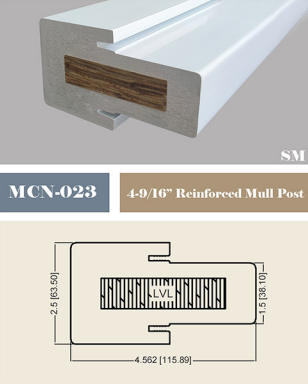
MCN-023 강화 멀 포스트는 4-9/16인치(11.7mm) 수직 구조 부재로, 도어 및 창 시스템을 결합하는 데 사용됩니다. 고정창, 여닫이창, 문, 측면창 등 인접한 유닛을 연결하고 고정하여 개구부의 안정성과 안전성을 확보하는 데 필요한 구조적 강도를 추가로 제공합니다. 내장된 LVL(적층 베니어 목재) 보강재는 하중 지지력과 뒤틀림 저항성을 크게 향상시킵니다.
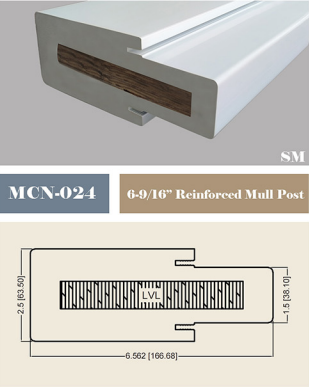
MCN-024 강화 멀 포스트는 6-9/16인치 수직 구조 부재로, 도어 및 창 시스템 결합용으로 설계되었습니다. 고정창, 여닫이창, 문, 측면창 등 인접한 유닛을 연결하고 고정하여 넓은 스팬의 개구부에 안정성과 안전성을 확보하는 추가적인 구조적 강도를 제공합니다.
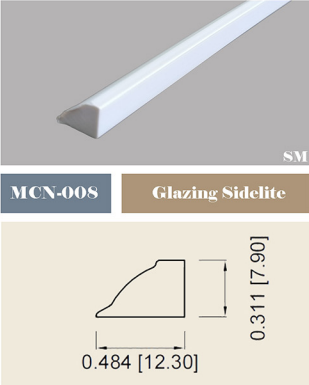
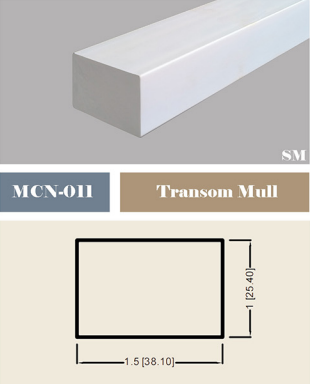
MCN-011 트랜섬 멀은 문과 그 위쪽의 트랜섬 창(측면창/반원형 채광창)을 분리하도록 설계된 전문가용 수평 프레임 부재입니다. 트랜섬에 구조적 지지력을 제공하는 동시에 깔끔한 시각적 구분선을 만들어주며, 주거용, 상업용 및 공공 건물 출입 시스템에 적합합니다.
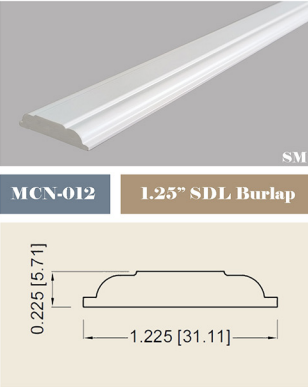
MCN-012 SDL 벌랩은 전통적인 분할창(SDL)의 외관을 재현하기 위해 유리 표면에 직접 부착하도록 설계된 모조 분할창 장식 스트립입니다. 창 구조 전체를 교체하지 않고도 클래식한 다중 유리창 디자인을 연출할 수 있습니다. 벌랩 마감은 독특한 직물 질감을 제공합니다.
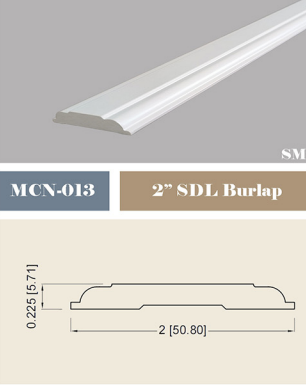
MCN-013 SDL 벌랩은 유리 표면에 직접 부착하여 전통적인 분할창의 외관을 재현하는 2인치 폭의 모조 분할창(SDL) 장식 스트립입니다. 더 좁은 버전과 비교했을 때, 2인치 폭은 더욱 굵고 견고한 격자 모양을 연출합니다. 벌랩 마감은 독특한 직물 질감을 제공하여 자연스럽고 소박한 장식적 매력을 더합니다.
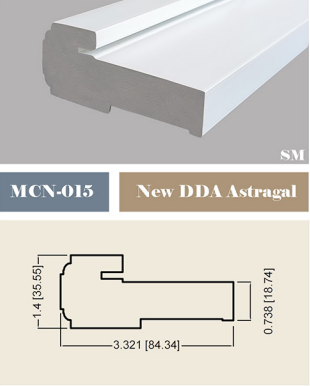
MCN-015 신형 DDA 아스트라갈은 장애인 차별 금지법(DDA) 기준을 충족하는 접근성 높은 이중문 시스템의 문틀 마감재입니다. 이 제품은 이중문의 사용하지 않는 쪽 문짝 가장자리에 설치되어 두 문짝 사이의 틈을 효과적으로 밀봉하는 동시에 개방력 및 틈 너비와 같은 접근성 요구 사항을 준수합니다.
Tel:
+86 18858129513