
Nouvelles
Contactez-nous dès maintenantHow PVC Door Frames Keep Screws Tight
-
 auteur
- 10 septembre 2026


A screw that loosens inside a door frame creates more than a small hardware problem. It can shift the hinge line, disturb the reveal, make the latch rub, and turn a finished door unit into a rework item. For door plants and distributors, the real question is whether the frame material can hold fasteners consistently through assembly, transport, and repeated use.
Screw Retention Depends on the Whole Profile
UN PVC door frame profile holds screws through a combination of surface hardness, internal density, wall geometry, and fastener choice. The screw does not rely on one thin skin. It needs enough material around the thread to resist pullout and enough dimensional stability to keep the hinge seat from shifting after the door leaves the plant.
This is where PVC differs from soft or inconsistent wood stock. A knot, split, or wet section in wood can weaken one fastening point even when the rest of the frame looks acceptable. A factory-extruded PVC component gives the hardware station a more uniform base, so operators can use the same screw setting and expect the same bite across the run.
Hardness controls the first bite
Surface hardness matters at the moment the screw enters the frame. Xinhong New Materials’ PVC frame production data lists HD surface hardness in the 80-85 range, which gives hinge and strike screws a firm starting point. That hardness is useful only when it is paired with correct pilot practice, screw type, and torque control.
Nail-holding strength supports handling loads
Fastener retention also has to survive movement before installation. The same factory data lists nail-holding strength at 2200-2300N, giving door plants a useful indicator for how the profile resists pull and vibration. That value should be treated as component evidence, not as permission to ignore hardware engineering or installation instructions.

The Risk Shows Up at Hinges and Strike Plates
Door hardware concentrates load in small zones. Hinges carry the door leaf, strike plates absorb closing force, and lockset areas face repeated side pressure. If the frame material crushes, splits, or creeps around those fastening points, the door unit may pass a quick shop inspection but fail after shipping or field use.
A reinforced door frame approach is useful because it treats hardware zones as structural areas, not simple attachment points. The profile should provide enough wall thickness and screw engagement for the intended door weight. In selected designs, internal SMC backing can add stiffness inside the PVC frame without changing the visible outside profile.
| Hardware zone | Common failure sign | What the PVC frame must provide |
| Hinge side | Screws loosen or hinge leaf tilts | Hard, stable screw base with adequate thread engagement |
| Strike side | Latch rubs or plate shifts | Consistent material around the fastening pocket |
| Head jamb | Reveal changes during handling | Straight profile geometry through packing and storage |
| Brickmould edge | Trim opens near fasteners | Fastener-compatible exterior surface and clean miter fit |
Fastener Choice Still Decides the Final Result
UN reinforced door jamb cannot compensate for the wrong screw. Exterior applications normally call for corrosion-resistant fasteners, and cold jobsite conditions may require pre-drilling to prevent stress around the fastening point. The material gives the screw a stable base, while the fastening method determines how well that base is used.
The practical shop rule is to control the variables that operators repeat every day. Screw length, thread style, driving angle, pilot size, and torque setting should be tested on the actual profile before a large order goes into production. A small test rack can reveal whether the screw head seats cleanly or whether the thread cuts too aggressively into the profile.
A stable setting prevents hidden damage
Overdriving can damage the holding zone even when the screw appears tight. Underdriving leaves the hinge proud and creates alignment problems. A repeatable torque range helps the PVC door jamb material do its job by keeping the thread engaged without crushing the surrounding profile.
The assembly line should test the real stack-up
Testing should include the hinge leaf, screw, jamb, any reinforcement layer, and the trim condition used in the actual door unit. A bare offcut may be useful for quick checks, but the full stack-up shows whether the hardware and profile work together under realistic assembly pressure.

What Buyers Should Ask Before Approving Samples
A screw-retention conversation should stay focused. The buyer does not need a broad material lecture; the buyer needs to know whether the frame will hold hardware in the intended door program. The most useful sample questions are direct:
- What hardness and nail-holding data apply to this exact frame profile?
- Which screw type and pilot practice were used during sample testing?
- Does the door weight require a standard PVC frame or an internally reinforced option?
- Can the same profile be supplied consistently for repeat production batches?
For importers comparing a solid PVC door frame with wood or mixed-material options, the sample should be judged by hinge stability, strike alignment, and edge condition after repeated opening and closing. Those checks answer the real manufacturing problem more clearly than a feature list.
Summary
PVC door frames keep screws tight when the material, profile geometry, and fastening method work together. Hardness gives the screw a firm start, nail-holding strength supports handling loads, and stable extrusion reduces the random weak spots that can appear in natural wood.
For door plants planning repeat production, Xinhong New Materials can support frame profile discussions around hardness, screw retention, internal reinforcement options, wall depth, and flat brickmould compatibility before the component moves into mass assembly.
FAQ
Can PVC door frames hold hinge screws well?
PVC door frames can hold hinge screws well when the profile has suitable hardness, screw engagement, and fastening practice. Buyers should test the exact screw and profile together before approving production.
Is a reinforced PVC frame always necessary?
A reinforced option is not always necessary. It becomes more relevant when the door leaf is heavy, the hardware load is concentrated, or the buyer wants added stiffness in the frame structure.
What fasteners work best with exterior PVC profiles?
Exterior PVC profiles usually need corrosion-resistant fasteners such as galvanized, stainless, or coated screws. The final choice should match the hardware, exposure, and installer instructions.
Why does torque control matter during assembly?
Torque control prevents both loose hardware and hidden material damage. A stable torque setting helps each screw seat cleanly without crushing the profile or leaving the hinge proud.
Should buyers test offcuts or full door assemblies?
Offcuts are useful for quick checks, but full door assemblies show the real stack-up. The hinge, screw, jamb, reinforcement, and trim all affect how the fastening point performs.

Produits
Produits associés
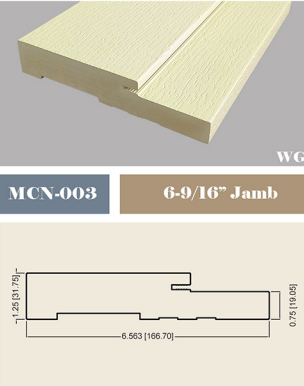
Le chambranle MCN-003 est un profilé de chambranle de porte de 16,7 cm (6-9/16 po) conçu pour couvrir toute la profondeur des ouvertures de portes et de fenêtres, assurant une protection complète du bord du vantail jusqu'à la surface extérieure du mur. Il offre une base de fixation stable pour le vantail tout en créant un bord net et précis pour l'ouverture. Particulièrement adapté aux murs épais ou aux systèmes de cadres de portes à isolation extérieure.
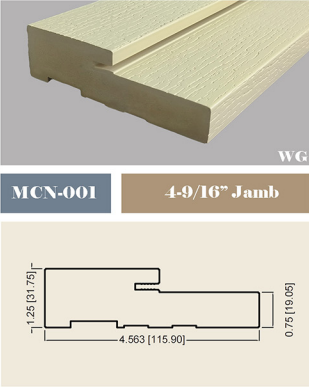
Le chambranle MCN-001 est un profilé de chambranle de porte de 116 mm (4-9/16 po) conçu pour couvrir toute la profondeur des ouvertures de portes et de fenêtres, assurant une protection complète du bord du vantail jusqu'à la surface extérieure du mur. Il offre une base de fixation stable pour le vantail et une finition nette du bord de l'ouverture. Convient aux systèmes de cadres de portes murales standard dans les bâtiments résidentiels et commerciaux.
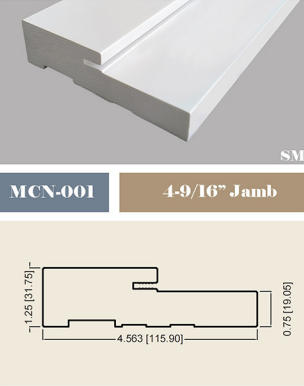
Le chambranle MCN-001 est un profilé de chambranle de porte de 116 mm (4-9/16 po) conçu pour couvrir toute la profondeur des ouvertures de portes et de fenêtres, assurant une protection complète du bord du vantail jusqu'à la surface extérieure du mur. Il offre une base de fixation stable pour le vantail et une finition nette du bord de l'ouverture. Convient aux systèmes de cadres de portes murales standard dans les bâtiments résidentiels et commerciaux.
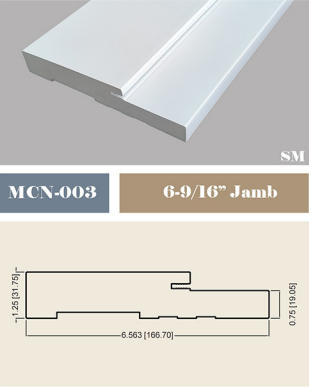
Le chambranle MCN-003 est un profilé de chambranle de porte de 16,7 cm (6-9/16 po) conçu pour couvrir toute la profondeur des ouvertures de portes et de fenêtres, assurant une protection complète du bord du vantail jusqu'à la surface extérieure du mur. Il offre une base de fixation stable pour le vantail tout en créant un bord net et précis pour l'ouverture. Particulièrement adapté aux murs épais ou aux systèmes de cadres de portes à isolation extérieure.
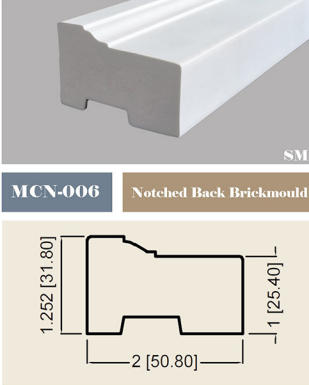
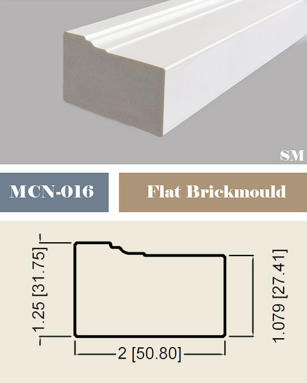
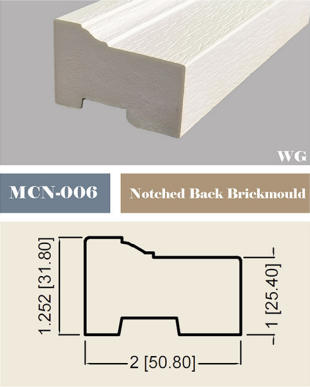
Le profilé de brique à encoche arrière MCN-006 est une moulure extérieure haut de gamme conçue pour les encadrements de portes et de fenêtres. L'encoche à l'arrière permet un ajustement précis aux briques, au crépi ou au bardage. Les profilés de brique de la série WG ont été affinés pour s'adapter à différentes épaisseurs de murs et à diverses applications.
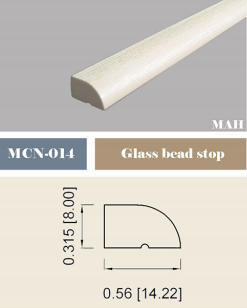
Le joint d'arrêt en verre MCN-014 est un composant de vitrage de conception professionnelle utilisé pour fixer, positionner et sceller les panneaux de verre des portes et fenêtres. Il s'installe entre le verre et le cadre pour empêcher tout mouvement du verre et offre une finition décorative impeccable. Convient aux systèmes de portes et fenêtres résidentiels et commerciaux.
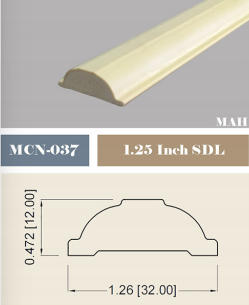
Le MCN-037 SDL est une baguette décorative de 3,2 cm (1,25 pouce) imitant les petits carreaux, conçue pour être appliquée directement sur les surfaces vitrées et reproduisant l'aspect des véritables fenêtres à petits carreaux traditionnelles. Elle permet d'obtenir l'esthétique classique d'une fenêtre à plusieurs carreaux sans remplacer l'ensemble de la structure. Son profil épuré s'harmonise avec une grande variété de styles architecturaux.
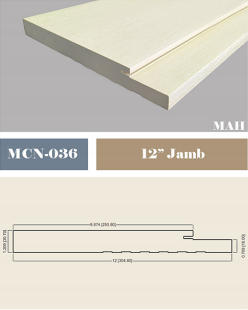
Le chambranle MCN-036 de 30,5 cm (12 po) est un chambranle extra-large conçu pour les murs épais ou les ouvertures de portes/fenêtres profondes. Son profil large couvre toute la distance entre le bord du vantail et la surface extérieure du mur, assurant un support stable et une finition décorative soignée. Convient aux bâtiments résidentiels, commerciaux et industriels.
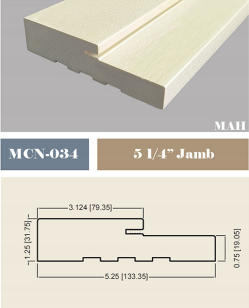
Le chambranle MCN-034 est un profilé de chambranle de porte de 13,3 cm (5-1/4 po) conçu pour couvrir toute la profondeur des ouvertures de portes et de fenêtres, assurant une protection complète du bord du vantail jusqu'à la surface extérieure du mur. Il offre une base de fixation stable pour le vantail tout en créant un bord net et précis pour l'ouverture. Convient aux systèmes de cadres de portes standard et à parois épaisses, dans les bâtiments résidentiels et commerciaux.
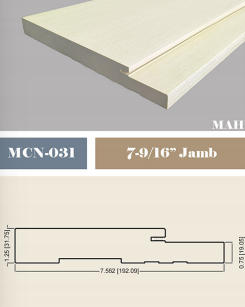
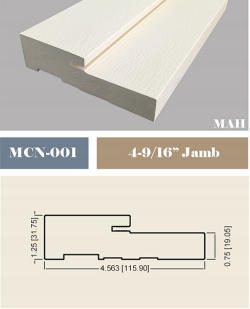
Le chambranle MCN-001 est un profilé de chambranle de porte de 116 mm (4-9/16 po) conçu pour couvrir toute la profondeur des ouvertures de portes et de fenêtres, assurant une protection complète du bord du vantail jusqu'à la surface extérieure du mur. Il offre une base de fixation stable pour le vantail et une finition nette du bord de l'ouverture. Convient aux systèmes de cadres de portes murales standard dans les bâtiments résidentiels et commerciaux.
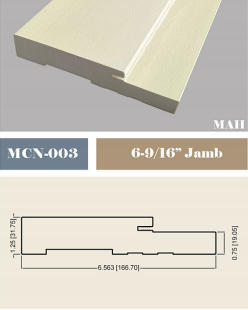
Le chambranle MCN-003 est un profilé de chambranle de porte de 16,7 cm (6-9/16 po) conçu pour couvrir toute la profondeur des ouvertures de portes et de fenêtres, assurant une protection complète du bord du vantail jusqu'à la surface extérieure du mur. Il offre une base de fixation stable pour le vantail tout en créant un bord net et précis pour l'ouverture. Particulièrement adapté aux murs épais ou aux systèmes de cadres de portes à isolation extérieure.
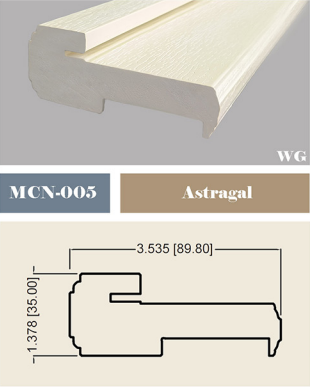
Ce joint d'étanchéité est un élément de finition professionnel conçu pour les portes doubles (portes-fenêtres). Il se fixe sur le chant du vantail inactif afin de masquer l'espace entre les deux vantaux, améliorant ainsi l'étanchéité à l'air, l'isolation phonique, l'intimité et offrant une finition esthétique.
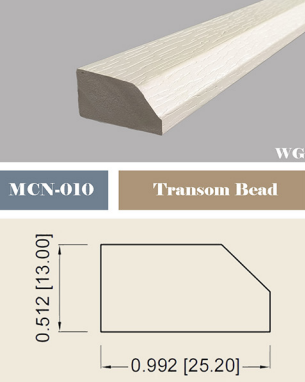
La baguette d'imposte MCN-010 est une moulure décorative de conception professionnelle pour les impostes (fenêtres fixes au-dessus des portes). Elle sert de bordure décorative, de maintien du vitrage ou de profilé de transition pour l'imposte. Son profil compact apporte une touche d'élégance aux ouvertures de portes dans les bâtiments résidentiels et commerciaux.
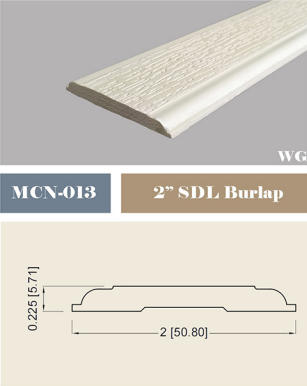
La frise décorative MCN-013 SDL Burlap, d'une largeur de 5 cm (2 pouces), imite les petits carreaux traditionnels et se pose directement sur le verre. Sa largeur de 5 cm (2 pouces) lui confère un aspect plus marqué et plus imposant. La finition en toile de jute lui donne une texture unique, rappelant le tissu, et ajoute une touche décorative naturelle et rustique.
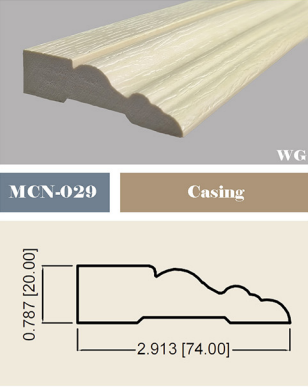
Le chambranle MCN-029 est une moulure de porte de conception professionnelle qui assure une transition décorative entre le cadre de la porte et le mur. Il masque l'espace entre le cadre et le mur, offrant une finition soignée et protégeant les bords du cadre de la porte. Convient aux ouvertures de portes intérieures dans les espaces résidentiels et commerciaux.
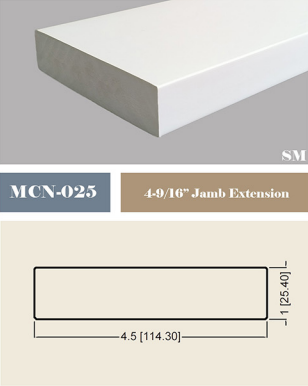
L'extension de chambranle MCN-025 est une rallonge de 116 mm (4-9/16 po) conçue pour augmenter la profondeur du chambranle standard des portes aux murs plus épais. Lorsque l'épaisseur du mur dépasse les dimensions standard du chambranle, l'extension se fixe parfaitement au bord du chambranle existant, assurant ainsi que le cadre soit aligné avec la surface du mur et offrant une base de montage complète et une finition impeccable.
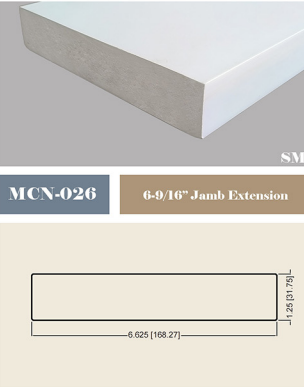
L'extension de chambranle MCN-026 est une rallonge de 16,7 cm (6-9/16 po) conçue pour augmenter la profondeur du chambranle standard des portes aux murs très épais. Lorsque l'épaisseur du mur dépasse les dimensions standard du chambranle, l'extension se fixe parfaitement au bord du chambranle existant, assurant ainsi un alignement parfait du cadre avec la surface du mur et offrant une base de montage complète et une finition impeccable.
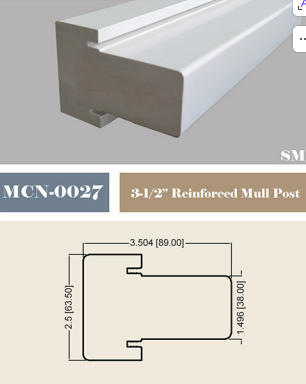
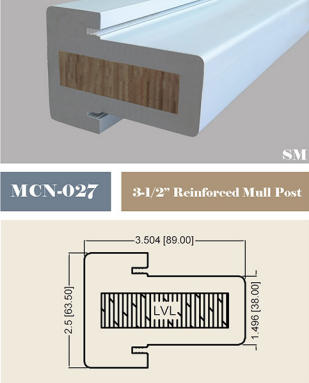
Le montant renforcé MCN-027 est un élément structurel vertical de 89 mm (3-1/2 po) conçu pour les systèmes combinés de portes et fenêtres. Il relie et fixe les éléments adjacents (fenêtres fixes, fenêtres ouvrantes, portes et impostes latérales, par exemple), offrant une résistance structurelle accrue pour une stabilité et une sécurité optimales des ouvertures. Le renforcement intégré en LVL (bois lamellé-collé) améliore considérablement sa capacité portante et sa résistance au gauchissement.
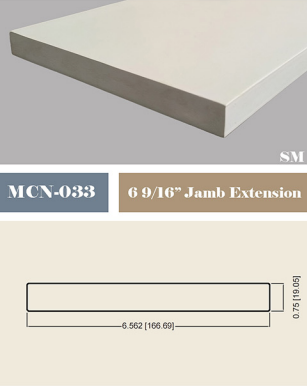
L'extension de chambranle MCN-033 est une rallonge de 16,7 cm (6-9/16 po) conçue pour augmenter la profondeur du chambranle standard des portes aux murs plus épais. Lorsque l'épaisseur du mur dépasse les dimensions standard du chambranle, l'extension se fixe parfaitement au bord du chambranle existant, assurant ainsi que le cadre soit aligné avec la surface du mur et offrant une base de montage complète et une finition impeccable.
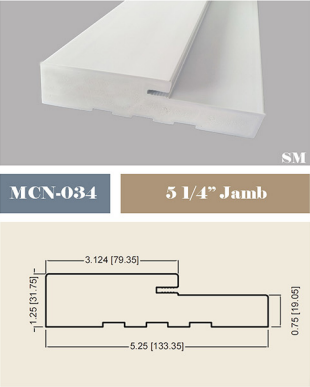
Le chambranle MCN-034 est un profilé de chambranle de porte de 13,3 cm (5-1/4 po) conçu pour couvrir toute la profondeur des ouvertures de portes et de fenêtres, assurant une protection complète du bord du vantail jusqu'à la surface extérieure du mur. Il offre une base de fixation stable pour le vantail et une finition nette du bord de l'ouverture. Convient aux systèmes de cadres de portes intérieures et extérieures des bâtiments résidentiels et commerciaux.
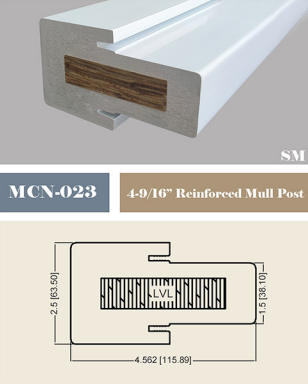
Le montant renforcé MCN-023 est un élément structurel vertical de 116 mm (4-9/16 po) conçu pour les systèmes combinés de portes et fenêtres. Il relie et fixe les éléments adjacents (fenêtres fixes, fenêtres ouvrantes, portes et impostes latérales, par exemple), offrant une résistance structurelle accrue pour une stabilité et une sécurité optimales des ouvertures. Le renforcement intégré en LVL (bois lamellé-collé) améliore considérablement sa capacité portante et sa résistance au gauchissement.
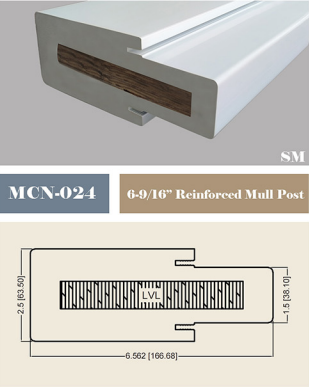
Le montant renforcé MCN-024 est un élément structurel vertical de 16,7 cm (6-9/16 po) conçu pour les systèmes combinés de portes et fenêtres. Il relie et fixe les éléments adjacents (fenêtres fixes, fenêtres ouvrantes, portes et impostes latérales, par exemple), offrant une résistance structurelle accrue pour garantir la stabilité et la sécurité des grandes ouvertures.
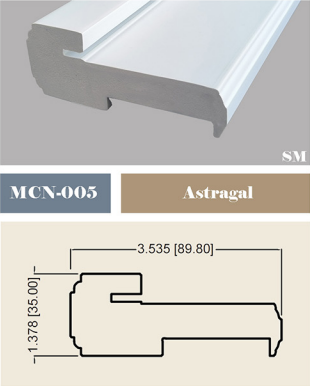
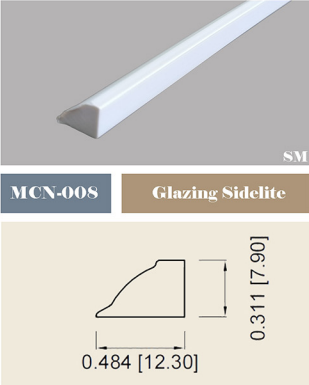
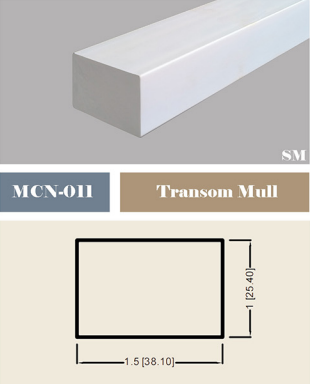
Le montant de traverse MCN-011 est un élément de charpente horizontal professionnel conçu pour séparer une porte de sa fenêtre de traverse (imposte latérale/fenêtre en éventail). Il assure le soutien structurel de la traverse tout en créant une ligne de séparation visuelle épurée, adaptée aux systèmes d'entrée des bâtiments résidentiels, commerciaux et publics.
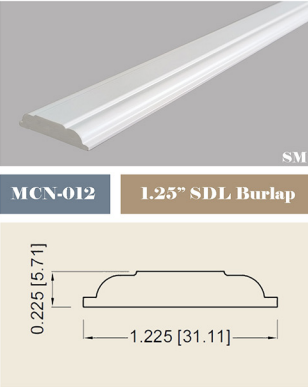
La baguette décorative MCN-012 SDL Burlap imite les petits carreaux traditionnels (SDL) et se pose directement sur le verre. Elle reproduit l'aspect des véritables fenêtres à petits carreaux classiques sans remplacer l'ensemble de la structure. Sa finition en toile de jute offre une texture unique, semblable à celle du tissu.
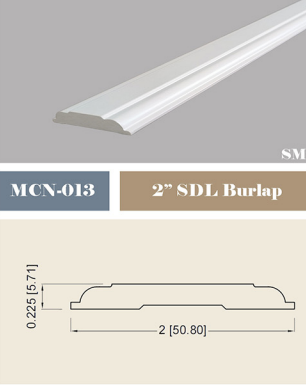
La baguette décorative MCN-013 SDL Burlap, d'une largeur de 5 cm (2 pouces), imite les petits carreaux traditionnels et se pose directement sur le verre. Plus large que les modèles plus étroits, elle offre un effet de croisillon plus marqué et plus imposant. Sa finition en toile de jute lui confère une texture unique, rappelant le tissu, et ajoute une touche rustique et naturelle.
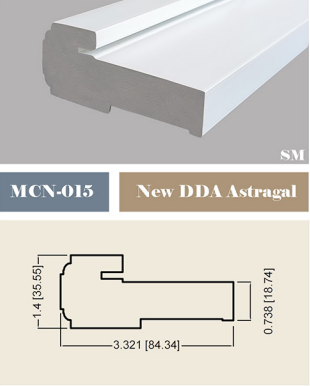
Le joint d'étanchéité MCN-015 New DDA est conçu pour répondre aux normes d'accessibilité des portes doubles (conformes à la loi américaine sur la discrimination des personnes handicapées / ADA). Il se fixe sur le chant du vantail inactif, assurant ainsi l'étanchéité entre les deux vantaux et garantissant le respect des exigences d'accessibilité, notamment en matière de force d'ouverture et de largeur d'espace.
Tel:
+86 18858129513