
Nouvelles
Contactez-nous dès maintenantHow Flat Brickmould Helps Stop Door Leaks
-
 auteur
- 14 octobre 2026

Exterior door leaks rarely come from one dramatic gap. They usually start where several parts meet: brickmould, jamb, wall cladding, threshold, sealant, and the lower corners of the opening. Flat Brickmould helps because it gives the outside edge a clean, stable landing surface. When it works with the threshold profile instead of sitting beside it as an afterthought, the door system has fewer weak paths for wind-driven rain.
Leaks collect at the frame edge
Water follows joints, pressure differences, and small changes in surface direction. The outer trim around a door is therefore more than decoration. It helps bridge the gap between the frame and the wall finish, and it gives the installer a defined edge for sealing. If that edge is uneven, too narrow, or poorly matched to the sill area, water can sit exactly where the assembly is hardest to inspect later.
Brick, stone, stucco, vinyl siding, and wood substrates all create different contact conditions around an exterior opening. A flat trim profile can make those conditions easier to control because the surface presses cleanly against the wall plane and leaves fewer irregular pockets at the perimeter.

Flat Brickmould gives the rain screen a cleaner edge
UN composite brickmould profile supports the first line of defense by covering the wall-to-frame transition. Xinhong New Materials’ MCN-016 Flat Brickmould has a 2 inch overall width and a 1.25 inch wall contact width, giving the trim enough face area to bridge common exterior substrates without looking bulky.
The flat face also matters for sealing. Caulk performs better when it is applied to a clean, dry, stable surface with enough contact area. A trim profile that rocks against uneven masonry or leaves a narrow seal line can make the joint more vulnerable once rain, heat, and movement begin working on it.
The profile shape affects how water leaves the opening
Flat Brickmould should help water move away from the frame rather than trap it at the edge. The goal is a clear exterior transition where runoff can pass over the face and down the wall, while sealed joints limit water entry behind the trim.
The wall contact width affects seal reliability
A useful trim profile gives the sealant and fasteners enough surface to work with. MCN-016 can be nailed, bonded, and sealed, so the same profile can suit brick, concrete, wood substrate walls, and other exterior trim conditions when the opening is prepared correctly.
| Door edge condition | Leak risk | Flat Brickmould role |
| Narrow trim contact | Sealant line becomes thin or uneven | Wider flat contact creates a steadier sealing surface |
| Uneven masonry edge | Water can sit behind trim pockets | Flat profile helps cover and stabilize the transition |
| Lower corner near sill | Wind-driven rain collects at the joint | Cleaner trim-to-threshold planning reduces exposed seams |
| Exterior finish change | Brick, stucco, or siding creates gaps at the frame | Consistent trim face makes the perimeter easier to seal |

The threshold profile completes the lower corner
The lower corners decide whether an exterior door feels weatherproof in real use. A door frame threshold must meet the jamb and exterior trim cleanly because wind-driven rain often tests the bottom of the assembly first. If the brickmould ends awkwardly above the sill, water can collect in the small return area and work inward.
A coordinated threshold and trim layout creates a physical path for water to shed outward. The idea is simple: keep the face trim, lower jamb, sill, and sealant line arranged so water sees a series of outward surfaces rather than a hidden pocket leading into the wall.
- Keep the flat side of the brickmould pressed evenly against the exterior wall surface.
- Use stainless nails or outdoor-grade adhesive where the substrate and project method call for them.
- Seal the perimeter with weatherproof caulk after the surface is clean, dry, and flat.
- Plan the sill, jamb, and trim together so the lower corner is not solved on site with a patch.
Material choice matters after the first rain
UN weatherproof exterior door frame depends on more than the first installation day. The frame edge must keep its shape through heat, humidity, rain, and normal building movement. PVC trim and jamb components help because they resist rot, rust, termites, moisture damage, and surface deterioration in wet exterior locations.
This is where Xinhong New Materials’ PVC system fits the leak problem without turning the conversation into a parts list. The company supplies PVC jambs, jamb extensions, and Flat Brickmould profiles in finishes such as smooth, woodgrain, fir, blue white, and white, so door plants and distributors can align exterior appearance with the weather-control function.
A pvc exterior door frame can also reduce maintenance pressure because the outer edge does not need the same painting routine as wood. Paintable options still matter for custom exterior colors, but the basic leak-control value comes from a profile that remains dimensionally stable and resistant to moisture at the opening perimeter.
A practical takeaway for exterior door systems
Flat Brickmould helps stop door leaks when it is treated as part of the weather-control system, not as a decorative strip added after the frame is chosen. Its flat contact surface, stable PVC material, and clean overlap with the jamb and threshold profile help reduce the small paths where water normally finds its way inward.
For door factories, distributors, and exterior-door programs, the useful next step is to match jamb depth, Flat Brickmould size, wall substrate, and threshold profile before production begins. That planning keeps the lower corner cleaner and makes the finished exterior opening easier to repeat across orders.
FAQ
Does Flat Brickmould make an exterior door waterproof by itself
Flat Brickmould does not make a door waterproof by itself. It helps control the outer transition, but the jamb, threshold, flashing approach, sealant, and site conditions also determine whether the opening resists water well.
Where does water usually enter around an exterior door
Water often enters around the lower corners, the trim-to-wall joint, the sill connection, or gaps behind uneven exterior finishes. These areas combine gravity, wind pressure, and hidden joints, so small mistakes can become visible leaks.
Why use PVC door frame trim instead of wood trim
PVC door frame trim is useful near exterior openings because it resists moisture damage, rot, and insects. Wood trim can work, but it needs more protection when rain splash, snow melt, or damp masonry are constant concerns.
Is composite brickmould suitable for brick and stucco walls
Composite brickmould can be suitable for brick and stucco walls when the surface is prepared correctly and the profile has enough wall contact width. A flat profile helps create a cleaner seal line across those surfaces.
Should the door jamb and sill be selected with the trim
The door jamb and sill should be selected with the trim because the lower corner depends on all three parts meeting cleanly. Matching them before production reduces field adjustment and helps the weatherproofing details repeat from unit to unit.

Produits
Produits associés
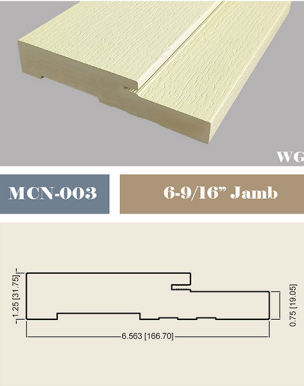
Le chambranle MCN-003 est un profilé de chambranle de porte de 16,7 cm (6-9/16 po) conçu pour couvrir toute la profondeur des ouvertures de portes et de fenêtres, assurant une protection complète du bord du vantail jusqu'à la surface extérieure du mur. Il offre une base de fixation stable pour le vantail tout en créant un bord net et précis pour l'ouverture. Particulièrement adapté aux murs épais ou aux systèmes de cadres de portes à isolation extérieure.
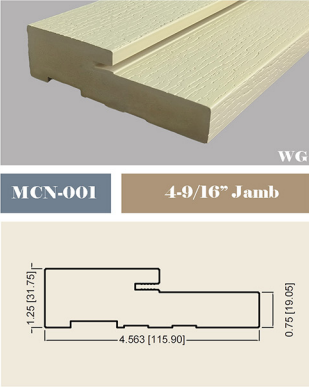
Le chambranle MCN-001 est un profilé de chambranle de porte de 116 mm (4-9/16 po) conçu pour couvrir toute la profondeur des ouvertures de portes et de fenêtres, assurant une protection complète du bord du vantail jusqu'à la surface extérieure du mur. Il offre une base de fixation stable pour le vantail et une finition nette du bord de l'ouverture. Convient aux systèmes de cadres de portes murales standard dans les bâtiments résidentiels et commerciaux.
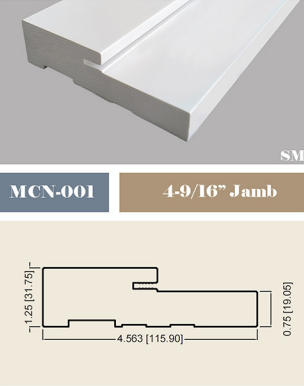
Le chambranle MCN-001 est un profilé de chambranle de porte de 116 mm (4-9/16 po) conçu pour couvrir toute la profondeur des ouvertures de portes et de fenêtres, assurant une protection complète du bord du vantail jusqu'à la surface extérieure du mur. Il offre une base de fixation stable pour le vantail et une finition nette du bord de l'ouverture. Convient aux systèmes de cadres de portes murales standard dans les bâtiments résidentiels et commerciaux.
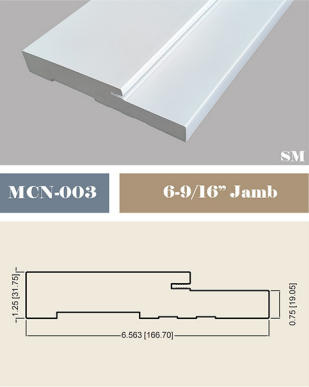
Le chambranle MCN-003 est un profilé de chambranle de porte de 16,7 cm (6-9/16 po) conçu pour couvrir toute la profondeur des ouvertures de portes et de fenêtres, assurant une protection complète du bord du vantail jusqu'à la surface extérieure du mur. Il offre une base de fixation stable pour le vantail tout en créant un bord net et précis pour l'ouverture. Particulièrement adapté aux murs épais ou aux systèmes de cadres de portes à isolation extérieure.
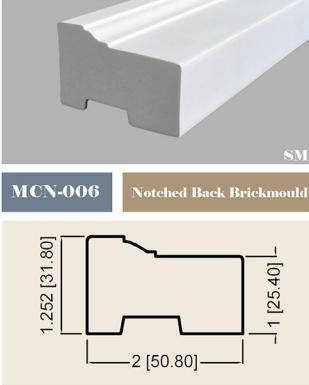
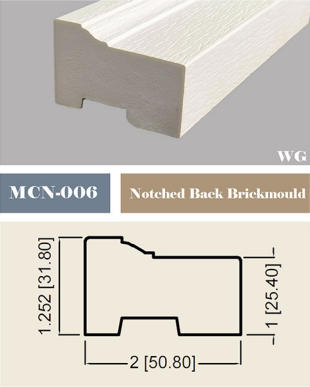
Le profilé de brique à encoche arrière MCN-006 est une moulure extérieure haut de gamme conçue pour les encadrements de portes et de fenêtres. L'encoche à l'arrière permet un ajustement précis aux briques, au crépi ou au bardage. Les profilés de brique de la série WG ont été affinés pour s'adapter à différentes épaisseurs de murs et à diverses applications.
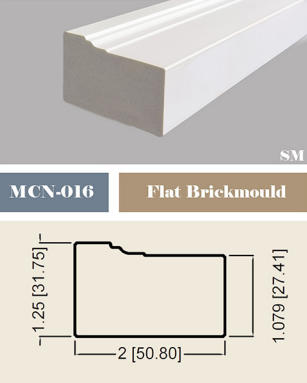
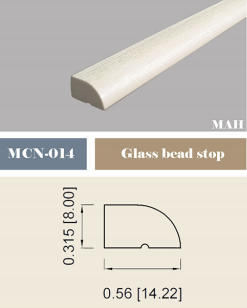
Le joint d'arrêt en verre MCN-014 est un composant de vitrage de conception professionnelle utilisé pour fixer, positionner et sceller les panneaux de verre des portes et fenêtres. Il s'installe entre le verre et le cadre pour empêcher tout mouvement du verre et offre une finition décorative impeccable. Convient aux systèmes de portes et fenêtres résidentiels et commerciaux.
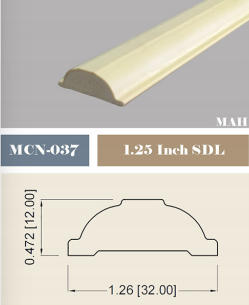
Le MCN-037 SDL est une baguette décorative de 3,2 cm (1,25 pouce) imitant les petits carreaux, conçue pour être appliquée directement sur les surfaces vitrées et reproduisant l'aspect des véritables fenêtres à petits carreaux traditionnelles. Elle permet d'obtenir l'esthétique classique d'une fenêtre à plusieurs carreaux sans remplacer l'ensemble de la structure. Son profil épuré s'harmonise avec une grande variété de styles architecturaux.
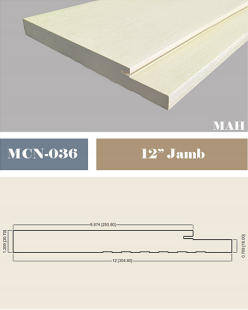
Le chambranle MCN-036 de 30,5 cm (12 po) est un chambranle extra-large conçu pour les murs épais ou les ouvertures de portes/fenêtres profondes. Son profil large couvre toute la distance entre le bord du vantail et la surface extérieure du mur, assurant un support stable et une finition décorative soignée. Convient aux bâtiments résidentiels, commerciaux et industriels.
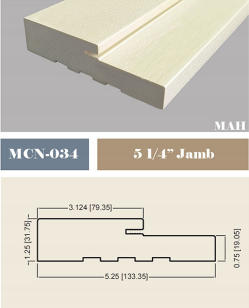
Le chambranle MCN-034 est un profilé de chambranle de porte de 13,3 cm (5-1/4 po) conçu pour couvrir toute la profondeur des ouvertures de portes et de fenêtres, assurant une protection complète du bord du vantail jusqu'à la surface extérieure du mur. Il offre une base de fixation stable pour le vantail tout en créant un bord net et précis pour l'ouverture. Convient aux systèmes de cadres de portes standard et à parois épaisses, dans les bâtiments résidentiels et commerciaux.
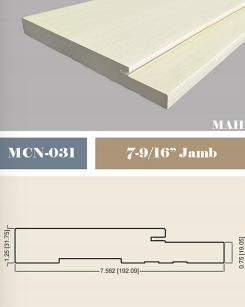
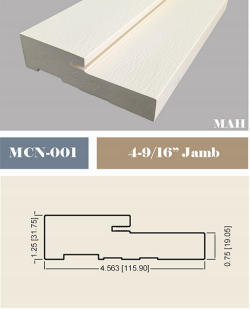
Le chambranle MCN-001 est un profilé de chambranle de porte de 116 mm (4-9/16 po) conçu pour couvrir toute la profondeur des ouvertures de portes et de fenêtres, assurant une protection complète du bord du vantail jusqu'à la surface extérieure du mur. Il offre une base de fixation stable pour le vantail et une finition nette du bord de l'ouverture. Convient aux systèmes de cadres de portes murales standard dans les bâtiments résidentiels et commerciaux.
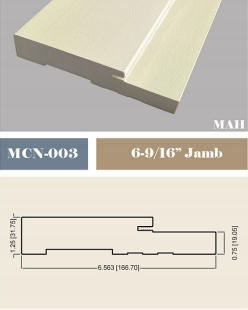
Le chambranle MCN-003 est un profilé de chambranle de porte de 16,7 cm (6-9/16 po) conçu pour couvrir toute la profondeur des ouvertures de portes et de fenêtres, assurant une protection complète du bord du vantail jusqu'à la surface extérieure du mur. Il offre une base de fixation stable pour le vantail tout en créant un bord net et précis pour l'ouverture. Particulièrement adapté aux murs épais ou aux systèmes de cadres de portes à isolation extérieure.
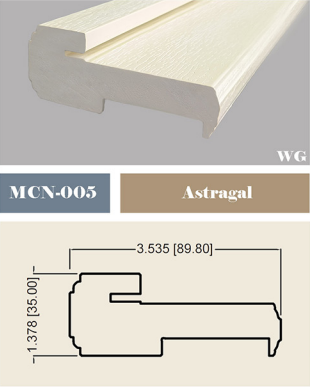
Ce joint d'étanchéité est un élément de finition professionnel conçu pour les portes doubles (portes-fenêtres). Il se fixe sur le chant du vantail inactif afin de masquer l'espace entre les deux vantaux, améliorant ainsi l'étanchéité à l'air, l'isolation phonique, l'intimité et offrant une finition esthétique.
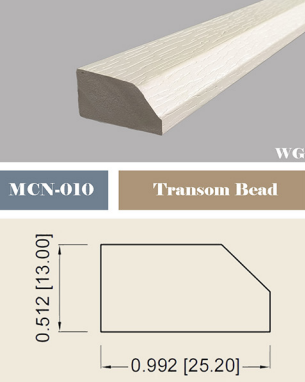
La baguette d'imposte MCN-010 est une moulure décorative de conception professionnelle pour les impostes (fenêtres fixes au-dessus des portes). Elle sert de bordure décorative, de maintien du vitrage ou de profilé de transition pour l'imposte. Son profil compact apporte une touche d'élégance aux ouvertures de portes dans les bâtiments résidentiels et commerciaux.
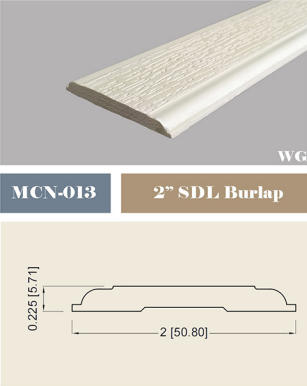
La frise décorative MCN-013 SDL Burlap, d'une largeur de 5 cm (2 pouces), imite les petits carreaux traditionnels et se pose directement sur le verre. Sa largeur de 5 cm (2 pouces) lui confère un aspect plus marqué et plus imposant. La finition en toile de jute lui donne une texture unique, rappelant le tissu, et ajoute une touche décorative naturelle et rustique.
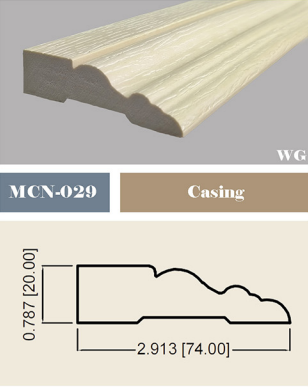
Le chambranle MCN-029 est une moulure de porte de conception professionnelle qui assure une transition décorative entre le cadre de la porte et le mur. Il masque l'espace entre le cadre et le mur, offrant une finition soignée et protégeant les bords du cadre de la porte. Convient aux ouvertures de portes intérieures dans les espaces résidentiels et commerciaux.
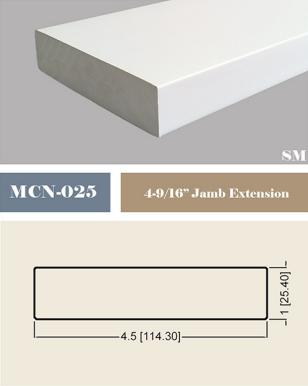
L'extension de chambranle MCN-025 est une rallonge de 116 mm (4-9/16 po) conçue pour augmenter la profondeur du chambranle standard des portes aux murs plus épais. Lorsque l'épaisseur du mur dépasse les dimensions standard du chambranle, l'extension se fixe parfaitement au bord du chambranle existant, assurant ainsi que le cadre soit aligné avec la surface du mur et offrant une base de montage complète et une finition impeccable.
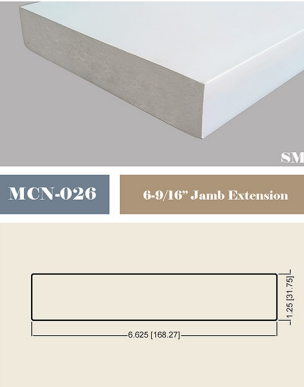
L'extension de chambranle MCN-026 est une rallonge de 16,7 cm (6-9/16 po) conçue pour augmenter la profondeur du chambranle standard des portes aux murs très épais. Lorsque l'épaisseur du mur dépasse les dimensions standard du chambranle, l'extension se fixe parfaitement au bord du chambranle existant, assurant ainsi un alignement parfait du cadre avec la surface du mur et offrant une base de montage complète et une finition impeccable.
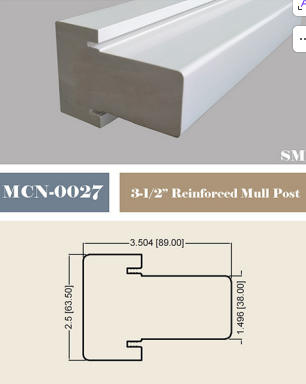
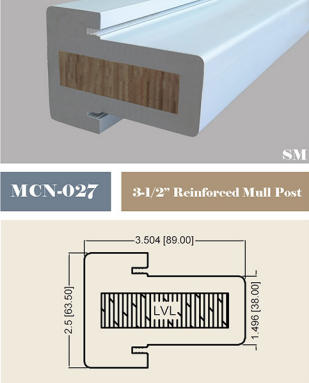
Le montant renforcé MCN-027 est un élément structurel vertical de 89 mm (3-1/2 po) conçu pour les systèmes combinés de portes et fenêtres. Il relie et fixe les éléments adjacents (fenêtres fixes, fenêtres ouvrantes, portes et impostes latérales, par exemple), offrant une résistance structurelle accrue pour une stabilité et une sécurité optimales des ouvertures. Le renforcement intégré en LVL (bois lamellé-collé) améliore considérablement sa capacité portante et sa résistance au gauchissement.
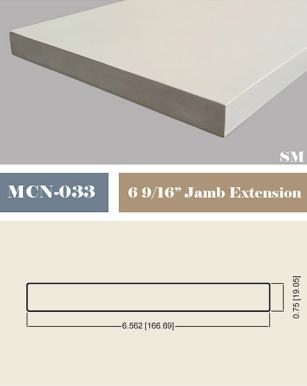
L'extension de chambranle MCN-033 est une rallonge de 16,7 cm (6-9/16 po) conçue pour augmenter la profondeur du chambranle standard des portes aux murs plus épais. Lorsque l'épaisseur du mur dépasse les dimensions standard du chambranle, l'extension se fixe parfaitement au bord du chambranle existant, assurant ainsi que le cadre soit aligné avec la surface du mur et offrant une base de montage complète et une finition impeccable.
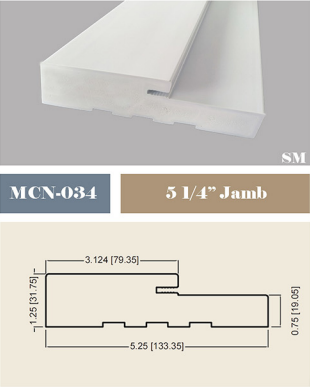
Le chambranle MCN-034 est un profilé de chambranle de porte de 13,3 cm (5-1/4 po) conçu pour couvrir toute la profondeur des ouvertures de portes et de fenêtres, assurant une protection complète du bord du vantail jusqu'à la surface extérieure du mur. Il offre une base de fixation stable pour le vantail et une finition nette du bord de l'ouverture. Convient aux systèmes de cadres de portes intérieures et extérieures des bâtiments résidentiels et commerciaux.
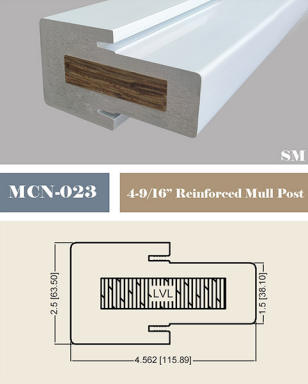
Le montant renforcé MCN-023 est un élément structurel vertical de 116 mm (4-9/16 po) conçu pour les systèmes combinés de portes et fenêtres. Il relie et fixe les éléments adjacents (fenêtres fixes, fenêtres ouvrantes, portes et impostes latérales, par exemple), offrant une résistance structurelle accrue pour une stabilité et une sécurité optimales des ouvertures. Le renforcement intégré en LVL (bois lamellé-collé) améliore considérablement sa capacité portante et sa résistance au gauchissement.
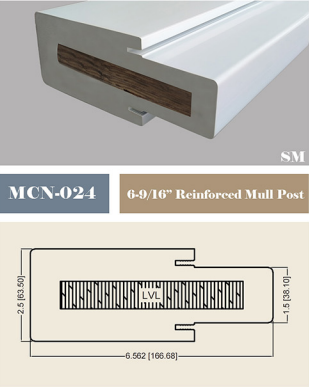
Le montant renforcé MCN-024 est un élément structurel vertical de 16,7 cm (6-9/16 po) conçu pour les systèmes combinés de portes et fenêtres. Il relie et fixe les éléments adjacents (fenêtres fixes, fenêtres ouvrantes, portes et impostes latérales, par exemple), offrant une résistance structurelle accrue pour garantir la stabilité et la sécurité des grandes ouvertures.
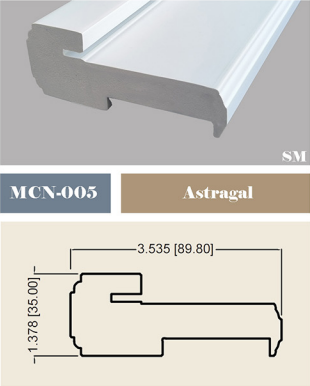
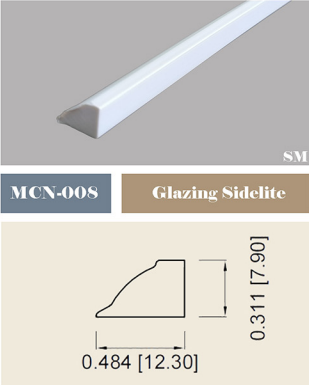
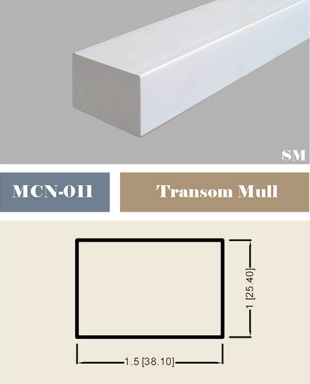
Le montant de traverse MCN-011 est un élément de charpente horizontal professionnel conçu pour séparer une porte de sa fenêtre de traverse (imposte latérale/fenêtre en éventail). Il assure le soutien structurel de la traverse tout en créant une ligne de séparation visuelle épurée, adaptée aux systèmes d'entrée des bâtiments résidentiels, commerciaux et publics.
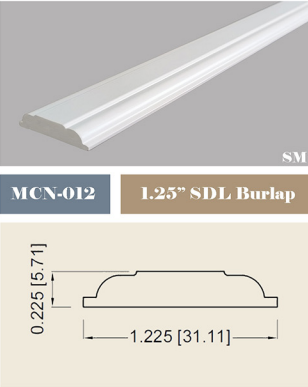
La baguette décorative MCN-012 SDL Burlap imite les petits carreaux traditionnels (SDL) et se pose directement sur le verre. Elle reproduit l'aspect des véritables fenêtres à petits carreaux classiques sans remplacer l'ensemble de la structure. Sa finition en toile de jute offre une texture unique, semblable à celle du tissu.
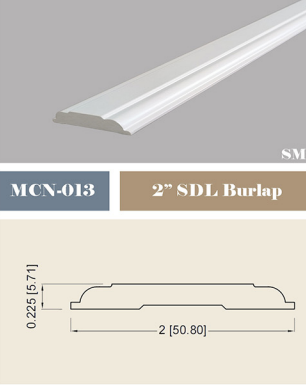
La baguette décorative MCN-013 SDL Burlap, d'une largeur de 5 cm (2 pouces), imite les petits carreaux traditionnels et se pose directement sur le verre. Plus large que les modèles plus étroits, elle offre un effet de croisillon plus marqué et plus imposant. Sa finition en toile de jute lui confère une texture unique, rappelant le tissu, et ajoute une touche rustique et naturelle.
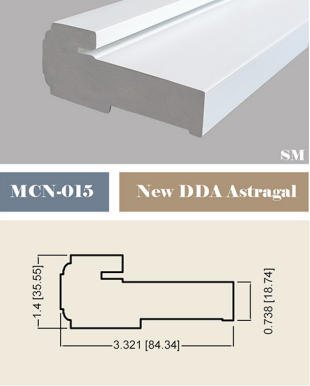
Le joint d'étanchéité MCN-015 New DDA est conçu pour répondre aux normes d'accessibilité des portes doubles (conformes à la loi américaine sur la discrimination des personnes handicapées / ADA). Il se fixe sur le chant du vantail inactif, assurant ainsi l'étanchéité entre les deux vantaux et garantissant le respect des exigences d'accessibilité, notamment en matière de force d'ouverture et de largeur d'espace.
Tel:
+86 18858129513