
Solution
Contact Now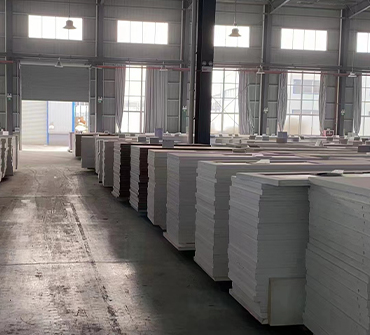
Why Choose Composite Brick Molds: Unlocking the Key to Efficiency and Precision in Modern Construction
In the wave of innovation in modern building materials, molds, as the “mother” of products, directly determine the quality, efficiency, and cost of the final components through their technological level. Among numerous mold technologies, composite brick molds, with their comprehensive and superior performance, are moving from behind the scenes to the forefront, becoming a core force driving the construction industry towards high efficiency, energy conservation, and customization.
I.Composite Molds: Technological Innovation Beyond “Molds”
Composite brick molds do not refer to a single-form product, but rather a type of solution that achieves performance exceeding that of traditional single-material molds through composite design in materials or structures. Its core concept is to break through the limitations of traditional steel, wood, or plastic molds, leveraging their strengths to create a synergistic effect of “1+1>2.” From a technological perspective, it mainly manifests in two forms:
Material Composite Type: For example, a layer of wear-resistant, elastic polymer material (such as special rubber, polyurethane, etc.) is bonded to the inner surface of a traditional steel mold using an adhesive, forming a mold cavity that combines rigidity and flexibility. This material gives the mold excellent impact resistance, tear resistance, and non-stick properties.
Structural-functional composite type: The mold itself is part of the product forming logic. For example, extrusion composite molds, through unique transition and forming section designs, can extrude bricks made of different materials (such as clay layers and shale brick bodies) in one go. There is also an innovative “brick-mold integration” design, where the brick itself has a mortise and tenon structure, which interlocks during construction to form a stable “mold,” into which a functional wall can be formed after filling.
II.Core Advantages of Choosing Composite Brick Molds
Choosing composite brick molds is essentially choosing a more forward-looking production and construction model. Its core advantages can be clearly demonstrated from the following dimensions:
1.Superior Product Performance and Finished Product Quality
The primary task of composite molds is to produce building components with superior performance.
Achieving multi-functional composite products: It can precisely form bricks with multi-layered composite structures. For example, “retro high-performance bricks” with a rustic clay-like surface and a high-strength shale interior can be produced, perfectly balancing aesthetics and mechanical requirements; or self-insulating concrete blocks with built-in polystyrene insulation boards can be manufactured to completely block thermal bridges, significantly improving the energy efficiency of walls.
Significantly improved product precision and consistency: The elastic lining in the composite mold effectively absorbs and buffers the stress of material compression, reducing problems such as missing corners and cracks caused by minor misalignments or hard friction, significantly improving yield and dimensional accuracy. A stable molding environment ensures the uniformity of quality for each batch of products.
2.Unprecedented production efficiency and economy
In today’s competitive landscape where cost and efficiency determine competitiveness, the advantages of composite molds are particularly prominent.
Revolutionary high-efficiency production process: The most significant efficiency improvement comes from one-step molding technology. Traditional composite bricks require step-by-step production and bonding, while advanced extrusion composite molds can achieve simultaneous co-extrusion and one-step molding of different material layers within the same mold, eliminating multiple intermediate processes and greatly simplifying the production process.
Significantly Longer Mold Life and Reduced Maintenance Costs: Traditional steel molds are brittle and easily worn. Molds lined with composite polymer materials exhibit a qualitative leap in wear resistance and impact resistance. This not only significantly extends the mold’s lifespan and reduces the frequency of mold purchase and replacement, but also improves overall production efficiency by reducing downtime for maintenance.
3.Strong Design Freedom and Construction Convenience: Composite mold technology opens up new possibilities for architectural design and construction.
Enabling the Manufacturing of Complex and Irregularly Shaped Components: Innovative structures such as “brick-mold integration” make it possible to manufacture multifunctional bricks with complex mortise and tenon joints, holes, or irregular curved surfaces. These bricks are both structural components and construction molds, greatly enriching the aesthetic language of building facades and wall structures.
Promoting Simplified and Standardized Construction Processes: Using pre-formed composite bricks (such as self-insulating bricks and brick-mold integrated bricks) for construction can reduce complex processes such as on-site formwork and external insulation, achieving integrated completion of wall structure and insulation functions. This not only shortens the construction period and reduces overall construction costs, but also reduces the quality risks associated with cross-disciplinary work.
III. Core Application Scenarios: From Inheritance to Innovation
Composite brick mold technology, due to its unique advantages, is playing an irreplaceable role in specific fields:
Historical Building Restoration and Antique-Style New Construction: For ancient building restoration and antique-style street construction projects that need to maintain the traditional appearance of clay bricks while meeting modern structural strength and safety standards, composite bricks, which can replicate the appearance and improve strength, are an ideal choice. This relies entirely on its specialized composite extrusion molds.
High-Performance Energy-Saving Buildings: In today’s pursuit of ultra-low energy consumption and near-zero energy consumption buildings, molds used to produce fully thermally insulating composite blocks are key technical equipment for constructing efficient building envelopes and meeting the latest mandatory energy-saving standards (such as energy saving rates of 75% or higher).
Modern Innovative Building Systems: Under the trend of advocating green and rapid construction and modular design, products such as integrated brick-mold and irregularly shaped multifunctional bricks provide new, flexible, and environmentally friendly technical options for rural construction, distinctive landscape walls, and low-carbon buildings.
1.Future Trends: Intelligentization and Sustainability The development of composite brick mold technology is booming, and in the future, it will be more closely integrated with two major trends:
Integration with Digital and Intelligent Manufacturing: Mold design will be fully optimized using CAE simulation, and its production and use processes will increasingly integrate sensors and intelligent control systems to achieve precise control of pressure, temperature, and material flow rate, moving towards a new stage of “intelligent molds.”
Deepening the Concept of Green Sustainability: Molds will focus more on utilizing solid waste such as coal gangue and shale, as well as industrial by-products such as slag and stone powder as production raw materials. At the same time, the “brick-mold integration” construction model, representing detachable and recyclable components, perfectly responds to the strategic need for reducing carbon emissions in the construction industry.
Choosing composite brick molds is far more than a simple tool upgrade. It represents a firm choice for a high-quality, high-efficiency, and highly flexible production method for building products, and an unremitting pursuit of the optimal solution integrating architectural aesthetics, performance, energy conservation, and ease of construction. From replicating the texture of history to building green living spaces for the future, composite brick molds, with their ingenious “composite” wisdom, are quietly shaping the solid structure of the architectural world and becoming the key to propelling the industry toward a more advanced and sustainable future.