
Noticias
Contacta ahoraBrick Mould Sizes and Profiles for PVC Door Frames
-
 autor
autor
- 17 septiembre 2026

Choosing the right brick mould for a PVC door frame involves more than simply looking at the Face Width. Profile Depth, Back Profile, Jamb Depth, overlap and stock length all affect the final fit. For door manufacturers and distributors, the difficulty is knowing what that size measures. Overall Width, Profile Depth, Face Width, Back Profile, Jamb Depth, overlap and stock length answer different questions. Once those dimensions are separated, a trim choice becomes easier to explain, repeat and check across a production run.
What a brick mould size actually measures
Brick mould forms the exterior border where the door frame meets the surrounding wall finish. It can meet brick, stucco or siding. The name describes its role as trim; it does not mean the moulding is made from brick. With PVC exterior door casing, Overall Width describes the full width of the profile, while Face Width refers specifically to the visible front face when that dimension is separately specified.
A two-inch Overall Width is a common option, but it is only one measurement. Profile Depth determines how far the section projects. Back Profile determines how the section sits against the adjoining surfaces. A flat Back Profile and a notched Back Profile may have the same Overall Width while meeting a stepped wall edge differently.
Each measurement needs a named reference point. A drawing should distinguish the full section from a local lip or recess. For wholesale listings, keeping those labels beside the model number helps prevent a familiar size from being mistaken for a complete fit specification.

Flat and notched backs change the fit
The Back Profile matters wherever the trim meets a change in surface level. A flat bearing surface needs suitable support, while a back relief can accommodate a particular step. That is why matching the Back Profile is as important as matching the Overall Width.
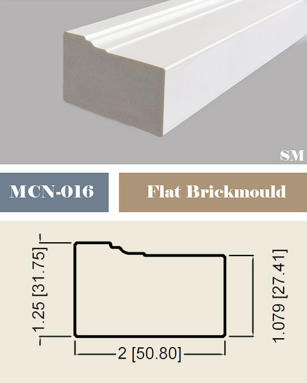
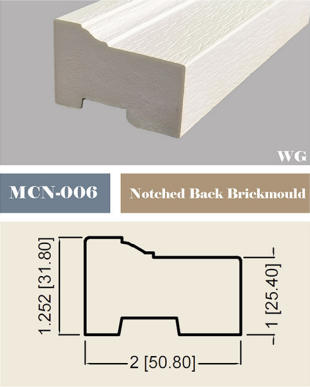
For this interface, Xinhong New Materials offers MCN-016 Flat Brickmould alongside MCN-006 Notched Back Brickmould. Both have a 2-inch Overall Width, so the useful comparison is how their Back Profiles meet the frame and wall. The flat option is part of the coordinated trim selection for our PVC jambs.
| Profile | Verified size or shape | Meaning for fit |
| MCN-016 Moldura plana para ladrillos | Overall Width: 2 in.; Profile Depth: 1.25 in.; Back Profile: Flat | Check coverage and projection separately. |
| MCN-006 Notched Back Brickmould | Overall Width: 2 in.; Back Profile: Notched | Match the notched Back Profile to the adjoining step. |
For MCN-016, the 2-inch Overall Width equals 50.80 mm, while the 1.25-inch Profile Depth equals 31.75 mm. They describe the component, not the finished opening. The back relief on MCN-006 also needs a full section check: its outer depth cannot be used as a substitute for the depth of the recess itself.

Jamb Depth sets the meeting point
The jamb brings the frame through the wall depth, while the brick mould finishes the exterior edge. A wider jamb does not automatically require a wider brick mould. The deciding issue is where the jamb ends relative to the cladding and how much space remains for the trim to bear and overlap.
This makes PVC door frame size a separate selection from the brick mould’s Overall Width and Face Width. The MCN-001 has a Jamb Depth of 4-9/16 inches (4.563 inches / 115.90 mm), while the MCN-003 has a Jamb Depth of 6-9/16 inches (6.563 inches / 166.70 mm). Each must match the actual wall build-up.
The two jamb options can therefore share a two-inch trim concept without sharing every installation detail. Check the exterior meeting point with the actual profile pair. If the jamb sits too far forward or back, extra Face Width alone will not create a properly supported joint.

Overlap determines the outside trim dimension
The outside brick mould dimension includes only the part of each side trim that extends beyond the frame. Some Face Width sits over the jamb. Adding two full trim widths to a Marco de puerta de PVC therefore overestimates the finished width whenever the trim overlaps the frame.
An illustrative calculation makes the distinction clear. Assume a frame is 36 inches wide, each brick mould has a 2-inch Overall Width, and each overlaps the frame by 0.75 inch. The projection beyond each side is 1.25 inches. The outside trim width is then 36 + 1.25 + 1.25 = 38.5 inches.
That example is geometry, not a universal allowance for our profiles. The actual overlap depends on the assembly, including its swing and reveal. Height also needs its own reference points: the head trim and sill are different boundaries. Confirm the finished outside width and height before matching the assembly to the exterior opening.
Stock length affects the cutting plan
Stock length answers how the selected profile becomes side and head pieces. The brick mould range includes 84, 101, 168 and 192-inch length categories. Confirm availability for the chosen model and finish, then calculate cuts from the assembled dimensions rather than the nominal door leaf size.
A cutting plan needs room for mitres, saw kerf and end trimming. Temperature movement needs separate treatment at installation. PVC trim expands and contracts as temperature changes, so a tight sample fit does not establish the correct allowance for every site. Use the applicable profile installation instructions for joint and fastening details.
A complete fit needs more than Face Width
A repeatable brick mould choice combines the visible width, rear shape, jamb meeting point and finished outside dimensions. Stock length follows from that geometry. For a door production programme, confirming those relationships on the actual assembly gives distributors a clearer basis for matching trim across orders.
Our Flat Brickmould and PVC jamb options can be considered together when checking the exterior transition for your door range.
Preguntas frecuentes
Does a flat back mean a completely plain face?
No. Back shape and visible face detail are separate features. MCN-016 combines a flat rear surface with moulded detail on its exposed face.
Does a deeper jamb need wider brick mould?
Not automatically. Jamb Depth follows the wall build-up. Brick mould width follows the exterior coverage and overlap needed at the meeting point.
Is brick mould the same as a threshold?
No. Brick mould finishes the exterior perimeter at the sides and head. The threshold is at the bottom of the doorway and needs its own dimensional check.

Productos
Productos relacionados
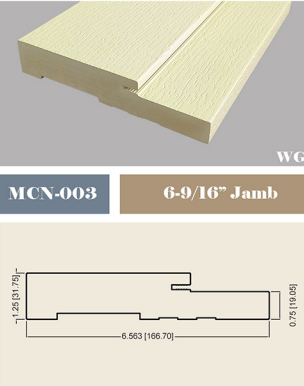
El perfil de jamba MCN-003 es un perfil de 17,6 cm (6-9/16") diseñado para cubrir la profundidad lateral de las aberturas de puertas y ventanas, proporcionando una cobertura completa desde el borde de la hoja de la puerta hasta la superficie de la pared exterior. Ofrece una base de montaje estable para la hoja de la puerta, creando un acabado limpio en el borde de la abertura. Es especialmente adecuado para paredes gruesas o sistemas de marcos de puertas con aislamiento exterior.
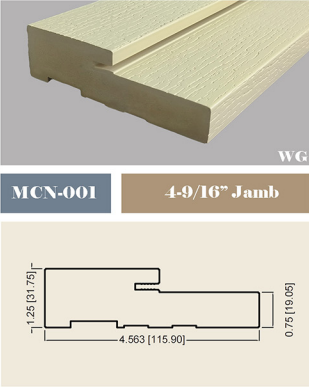
El perfil de jamba MCN-001 es un perfil de 12,5 cm (4-9/16") diseñado para cubrir la profundidad lateral de las aberturas de puertas y ventanas, proporcionando una cobertura completa desde el borde de la hoja de la puerta hasta la superficie de la pared exterior. Ofrece una base de montaje estable para la hoja de la puerta, creando un acabado limpio en el borde de la abertura. Adecuado para sistemas de marcos de puertas estándar en edificios residenciales y comerciales.
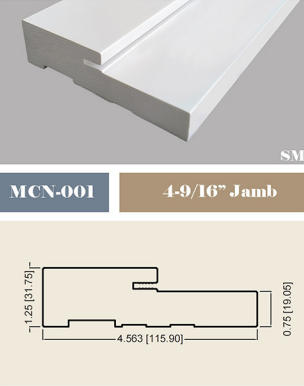
El perfil de jamba MCN-001 es un perfil de 12,5 cm (4-9/16") diseñado para cubrir la profundidad lateral de las aberturas de puertas y ventanas, proporcionando una cobertura completa desde el borde de la hoja de la puerta hasta la superficie de la pared exterior. Ofrece una base de montaje estable para la hoja de la puerta, creando un acabado limpio en el borde de la abertura. Adecuado para sistemas de marcos de puertas estándar en edificios residenciales y comerciales.
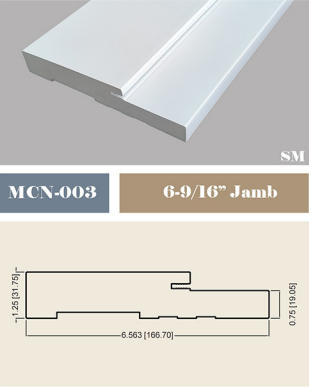
El perfil de jamba MCN-003 es un perfil de 17,6 cm (6-9/16") diseñado para cubrir la profundidad lateral de las aberturas de puertas y ventanas, proporcionando una cobertura completa desde el borde de la hoja de la puerta hasta la superficie de la pared exterior. Ofrece una base de montaje estable para la hoja de la puerta, creando un acabado limpio en el borde de la abertura. Es especialmente adecuado para paredes gruesas o sistemas de marcos de puertas con aislamiento exterior.
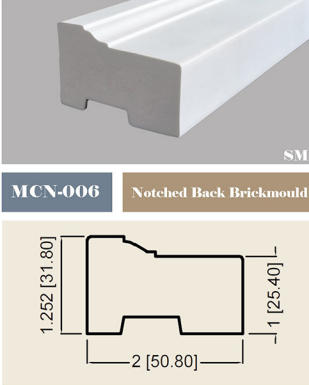
La moldura para ladrillo MCN-006 con muesca en la parte posterior es un remate exterior de alta calidad para marcos de puertas y ventanas. La muesca en la parte posterior permite un ajuste más preciso a ladrillos, estuco o revestimientos. Las molduras de la serie WG se han estilizado para adaptarse a diversos espesores de pared y aplicaciones.
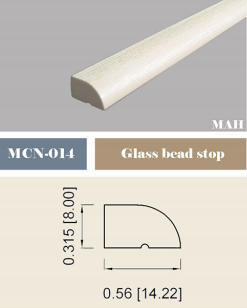
El tope de vidrio MCN-014 es un componente de acristalamiento de diseño profesional que se utiliza para asegurar, posicionar y sellar paneles de vidrio en puertas y ventanas. Se instala entre el vidrio y el marco para evitar el movimiento del vidrio y proporcionar un acabado decorativo impecable. Apto para sistemas de puertas y ventanas residenciales y comerciales.
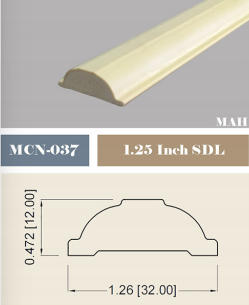
La tira decorativa MCN-037 SDL, de 3,17 cm (1,25 pulgadas), simula un panel dividido y se aplica directamente sobre superficies de vidrio, replicando la apariencia de las ventanas tradicionales con paneles divididos. Logra una estética clásica de ventana multipanel sin necesidad de reemplazar toda la estructura. Su perfil limpio se adapta a diversos estilos arquitectónicos.
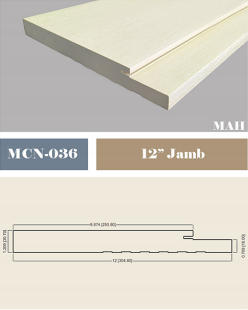
El marco MCN-036 de 30 cm (12") es un marco de puerta extra ancho diseñado para paredes gruesas o aberturas profundas de puertas y ventanas. Su perfil ancho abarca toda la distancia desde el borde de la hoja de la puerta hasta la superficie exterior de la pared, proporcionando un soporte estable y un acabado decorativo impecable. Adecuado para edificios residenciales, comerciales e industriales.
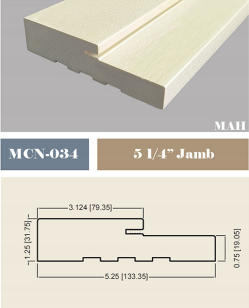
El perfil de jamba MCN-034 es un perfil de 13,3 cm (5-1/4") diseñado para cubrir la profundidad lateral de las aberturas de puertas y ventanas, proporcionando una cobertura completa desde el borde de la hoja de la puerta hasta la superficie de la pared exterior. Ofrece una base de montaje estable para la hoja de la puerta, creando un acabado limpio en el borde de la abertura. Adecuado para sistemas de marcos de puertas estándar y de pared engrosada en edificios residenciales y comerciales.
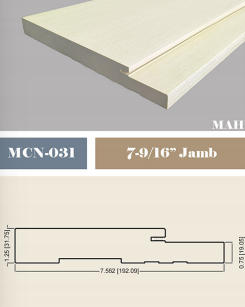
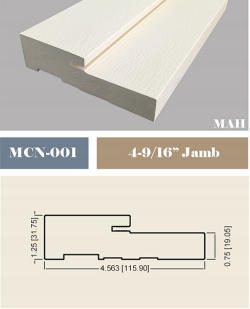
El perfil de jamba MCN-001 es un perfil de 12,5 cm (4-9/16") diseñado para cubrir la profundidad lateral de las aberturas de puertas y ventanas, proporcionando una cobertura completa desde el borde de la hoja de la puerta hasta la superficie de la pared exterior. Ofrece una base de montaje estable para la hoja de la puerta, creando un acabado limpio en el borde de la abertura. Adecuado para sistemas de marcos de puertas estándar en edificios residenciales y comerciales.
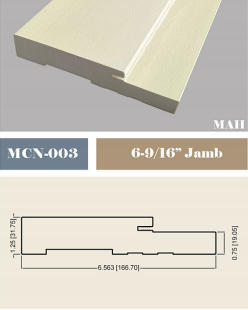
El perfil de jamba MCN-003 es un perfil de 17,6 cm (6-9/16") diseñado para cubrir la profundidad lateral de las aberturas de puertas y ventanas, proporcionando una cobertura completa desde el borde de la hoja de la puerta hasta la superficie de la pared exterior. Ofrece una base de montaje estable para la hoja de la puerta, creando un acabado limpio en el borde de la abertura. Es especialmente adecuado para paredes gruesas o sistemas de marcos de puertas con aislamiento exterior.
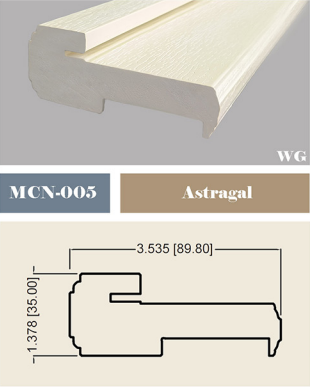
Este junquillo es un componente profesional para puertas dobles (puertas francesas o de dos hojas). Se instala en el borde de la hoja inactiva para cubrir el espacio entre ambas, mejorando el sellado hermético, el aislamiento acústico, la privacidad y proporcionando un acabado estético impecable.
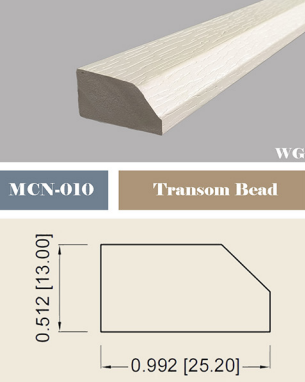
El perfil de remate MCN-010 es una moldura decorativa de diseño profesional para ventanas superiores (ventanas fijas sobre puertas). Sirve como borde decorativo, sistema de sujeción del vidrio o moldura de transición para la zona superior de la ventana. Su perfil compacto añade un toque de distinción a las aberturas de las puertas en edificios residenciales y comerciales.
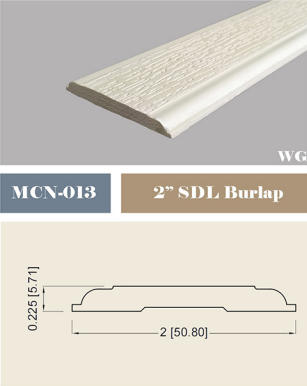
La tira decorativa MCN-013 SDL Burlap, de 5 cm de ancho, simula un panel de vidrio dividido (SDL) y está diseñada para aplicarse directamente sobre superficies de vidrio, replicando la apariencia de las ventanas tradicionales con paneles de vidrio dividido. Su ancho de 5 cm ofrece una apariencia de rejilla más llamativa y robusta. El acabado de arpillera proporciona una textura única similar a la tela, añadiendo un encanto decorativo natural y rústico.
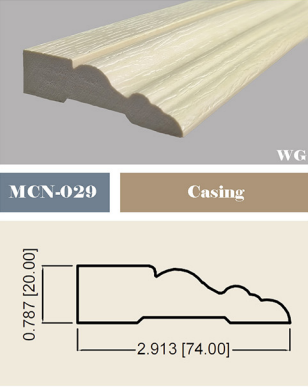
La moldura MCN-029 es un perfil de puerta de diseño profesional que proporciona una transición decorativa entre el marco de la puerta y la pared. Cubre el espacio entre el marco y la superficie de la pared, ofreciendo un acabado limpio y elegante, a la vez que protege los bordes del marco de posibles daños. Ideal para puertas interiores en espacios residenciales y comerciales.
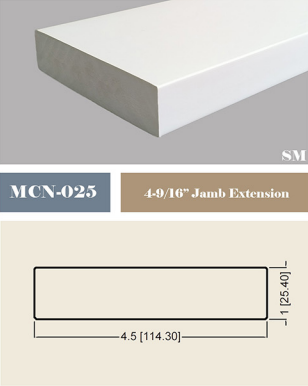
La extensión de jamba MCN-025 es un extensor de profundidad de jamba de 12,5 cm (4-9/16") diseñado para aumentar la profundidad estándar de la jamba de la puerta en paredes más gruesas. Cuando el grosor de la pared supera las dimensiones estándar de la jamba, la extensión se fija sin problemas al borde de la jamba existente, asegurando que el marco quede al ras con la superficie de la pared y proporcionando una base de montaje completa con un acabado impecable.
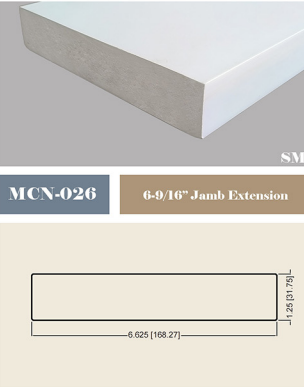
La extensión de jamba MCN-026 es un extensor de profundidad de jamba de 17,6 cm (6-9/16") diseñado para aumentar la profundidad estándar de la jamba de la puerta en paredes extragruesas. Cuando el grosor de la pared supera las dimensiones estándar de la jamba, la extensión se fija sin problemas al borde de la jamba existente, asegurando que el marco quede al ras con la superficie de la pared y proporcionando una base de montaje completa con un acabado impecable.
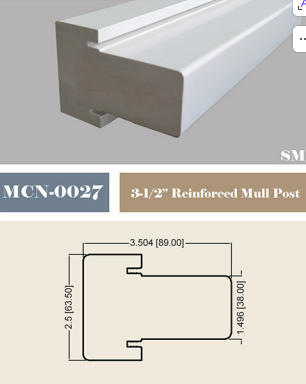
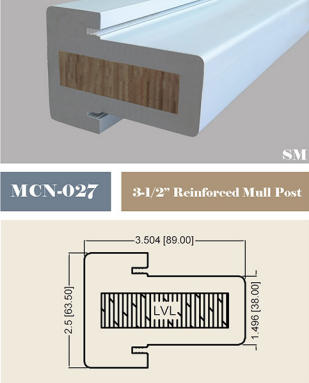
El montante reforzado MCN-027 es un elemento estructural vertical de 8,9 cm (3-1/2") diseñado para sistemas combinados de puertas y ventanas. Conecta y asegura las unidades adyacentes (como ventanas fijas, ventanas practicables, puertas y paneles laterales), proporcionando mayor resistencia estructural para garantizar la estabilidad y seguridad de las aberturas. El refuerzo integrado de madera laminada enchapada (LVL) mejora significativamente la capacidad de carga y la resistencia a la deformación.
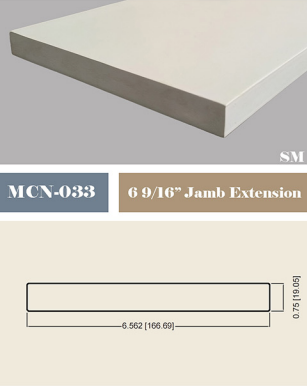
La extensión de jamba MCN-033 es un extensor de profundidad de jamba de 17,6 cm (6-9/16") diseñado para aumentar la profundidad estándar de la jamba de la puerta en paredes más gruesas. Cuando el grosor de la pared supera las dimensiones estándar de la jamba, la extensión se fija sin problemas al borde de la jamba existente, asegurando que el marco quede al ras con la superficie de la pared y proporcionando una base de montaje completa con un acabado impecable.
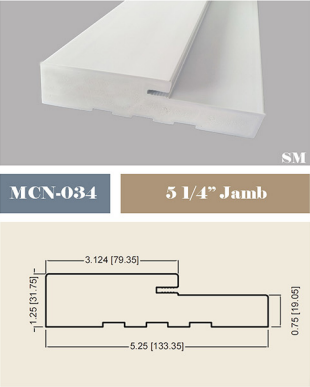
El perfil de jamba MCN-034 es un perfil de 13,3 cm (5-1/4") diseñado para cubrir la profundidad lateral de las aberturas de puertas y ventanas, proporcionando una cobertura completa desde el borde de la hoja de la puerta hasta la superficie de la pared exterior. Ofrece una base de montaje estable para la hoja de la puerta, creando un acabado limpio en el borde de la abertura. Adecuado para sistemas de marcos de puertas interiores y exteriores en edificios residenciales y comerciales.
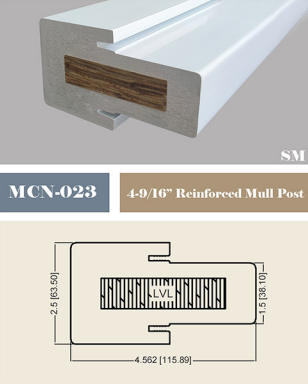
El montante reforzado MCN-023 es un elemento estructural vertical de 12,5 cm (4-9/16") diseñado para sistemas combinados de puertas y ventanas. Conecta y asegura las unidades adyacentes (como ventanas fijas, ventanas practicables, puertas y paneles laterales), proporcionando mayor resistencia estructural para garantizar la estabilidad y seguridad de las aberturas. El refuerzo integrado de madera laminada enchapada (LVL) mejora significativamente la capacidad de carga y la resistencia a la deformación.
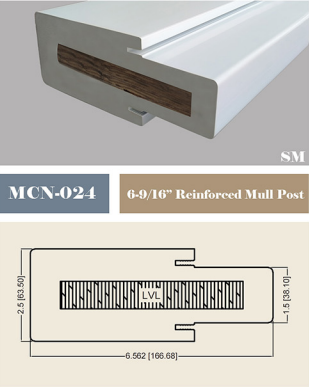
El montante reforzado MCN-024 es un elemento estructural vertical de 17,6 cm (6-9/16") diseñado para sistemas combinados de puertas y ventanas. Conecta y asegura las unidades adyacentes (como ventanas fijas, ventanas practicables, puertas y paneles laterales), proporcionando resistencia estructural adicional para garantizar la estabilidad y la seguridad en aberturas de gran envergadura.
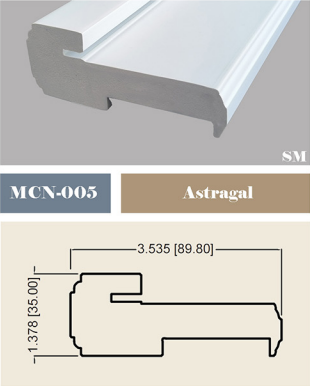
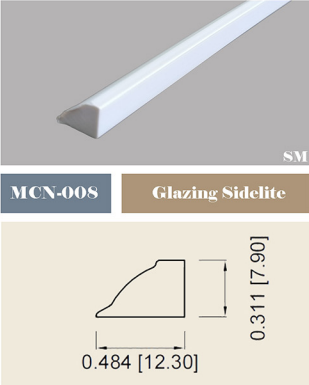
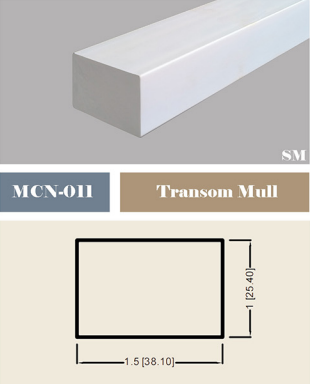
El montante de travesaño MCN-011 es un elemento de estructura horizontal profesional diseñado para separar una puerta de la ventana superior (lateral o semicircular). Proporciona soporte estructural al travesaño a la vez que crea una línea divisoria visual definida, siendo adecuado para sistemas de acceso en edificios residenciales, comerciales y públicos.
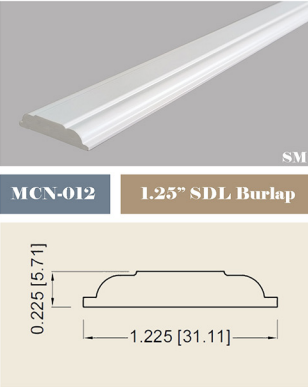
La tira decorativa MCN-012 SDL Burlap simula un vidrio dividido (SDL), diseñada para aplicarse directamente sobre superficies de vidrio y replicar la apariencia de las ventanas tradicionales con vidrio dividido. Logra una estética clásica de ventana de varios paneles sin necesidad de reemplazar toda la estructura. Su acabado tipo arpillera ofrece una textura única similar a la de la tela.
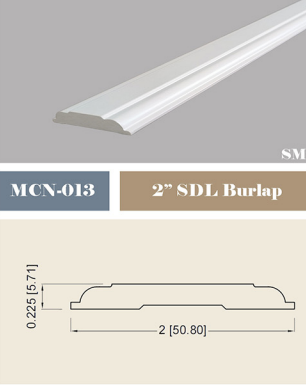
La tira decorativa MCN-013 SDL Burlap, de 5 cm de ancho, simula un panel de vidrio dividido (SDL) y está diseñada para aplicarse directamente sobre superficies de vidrio, replicando la apariencia de las ventanas tradicionales con paneles de vidrio dividido. En comparación con versiones más estrechas, su ancho de 5 cm ofrece una apariencia de rejilla más llamativa y robusta. El acabado de arpillera proporciona una textura única similar a la tela, añadiendo un encanto decorativo natural y rústico.
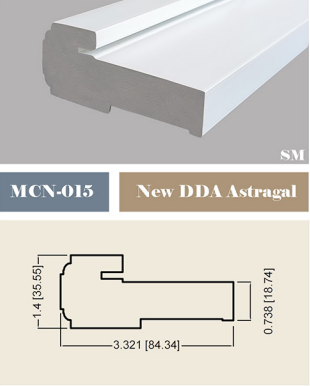
El burlete MCN-015 New DDA está diseñado para cumplir con los estándares de la Ley de Discriminación por Discapacidad (ADA) para sistemas de puertas dobles accesibles. Se instala en el borde de la hoja inactiva de las puertas dobles, sellando eficazmente el espacio entre las dos hojas y garantizando el cumplimiento de los requisitos de accesibilidad, como la fuerza de apertura y el ancho del espacio.
Tel:
+86 18858129513